
AI's 2025 Playbook: Agents, On‐Device Models, and Enterprise Integration
Published Jan 4, 2026
Worried you’re missing the AI inflection point? In the last two weeks (late Dec 2024–early Jan 2025) three practical shifts matter for your org: OpenAI shipped o3-mini (Dec 18) as a low-cost reasoning workhorse now used for persistent agents in CI, log triage and repo refactors; Apple signaled a 2025 push for on-device, private assistants with “Ajax” leaks and Core ML/MLX updates (Dec 23–28) that reward distillation and edge-serving; and developer tooling tied AI into platform engineering—Copilot, PR review and incident context moved toward org graphs (Dec 20–31). Parallel moves: quantum vendors (IBM, Quantinuum) pushed logical-qubit roadmaps, biotech advanced AI-driven molecular design and safety data, exchanges co-located ML near matching engines, and OpenTelemetry/observability and memory-safe guidance (CISA, Dec 19) are making AI traceable and compulsory. Short take: invest in edge/agent stacks, SRE-grade observability, latency engineering, and justify any non-use of memory-safe languages.
AI Goes Backend: Agentic Workflows, On‐Device Models, Platform Pressure
Published Jan 4, 2026
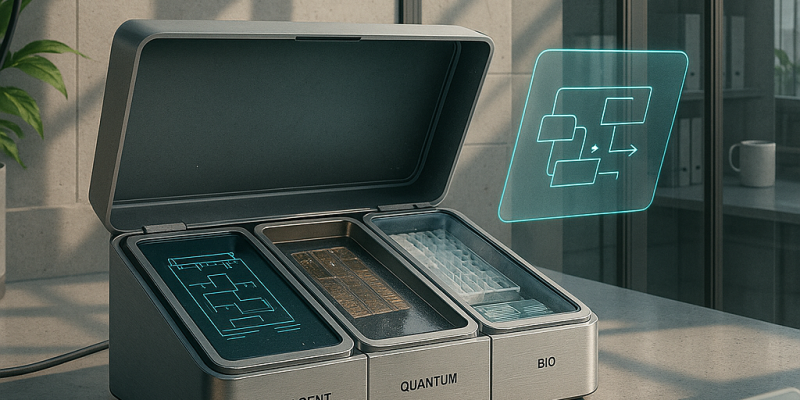
Two weeks of signals show the game shifting from “bigger model wins” to “who wires the model into a reliable workflow.” You get: Anthropic launched Claude 3.7 Sonnet on 2025‐12‐19 as a tool‐using backend for multi‐step program synthesis and API workflows; OpenAI’s o3 mini (mid‐December) added controllable reasoning depth; Google’s Gemini 2.0 Flash and on‐device families (Qwen2.5, Phi‐4, Apple tooling) push low‐latency and edge tiers. Quantum vendors (Quantinuum, QuEra, Pasqal) now report logical‐qubit and fidelity metrics, while Qiskit/Cirq focus on noise‐aware stacks. Biotech teams are wiring AI into automated labs and trials; imaging, scribes, and EHR integrations roll out in Dec–Jan. For ops and product leaders, the takeaway is clear: invest in orchestration, observability, supply‐chain controls, and hybrid model routing—that’s where customer value and risk management live.

From Demos to Production: AI Becomes Core Infrastructure Across Industries
Published Jan 4, 2026
Worried AI pilots will break your repo or your compliance? In the last two weeks (late Dec 2025–early Jan 2026) vendors pushed agentic, repo‐wide coding tools (GitHub Copilot Workspace, Sourcegraph Cody, Tabnine, JetBrains) into structured pilots; on‐device multimodal models hit practical latencies (Qualcomm, Apple, community toolchains); AI became treated as first‐class infra (Humanitec, Backstage plugins; Arize, LangSmith, W&B observability); quantum announcements emphasized logical qubits and error‐correction; pharma and protein teams reported end‐to‐end AI discovery pipelines; brokers tightened algorithmic trading guardrails; governments and OSS groups pushed memory‐safe languages and SBOMs; and creative suites integrated AI as assistive features with provenance. What to do now: pilot agents with strict review/audit, design hybrid on‐device/cloud flows, platformize AI telemetry and governance, adopt memory‐safe/supply‐chain controls, and track logical‐qubit roadmaps for timing.

On‐Device AI Goes Multimodal: Privacy, Speed, and Offline Power
Published Jan 4, 2026
3B–15B parameter models are moving on‐device, not just in the cloud—Apple’s developer docs (12/23/2024) and Snapdragon X Elite previews (late Dec–early Jan for CES) show 3B–15B and 7B–13B models running locally on A17 Pro, M‐series and NPUs with server fallbacks. What does that mean for you? Expect faster, more private, lower‐latency features in Mail, Notes and Copilot+ PCs (OEMs due early 2025), but also new constraints: energy budgets, quantization, and heterogeneous NPUs. At the same time GitHub and Datadog pushed agents into structured workflows (Dec 2024), biotech firms (Absci, Generate, Intellia) report AI‐designed candidates, and quantum and exchanges are refocusing on logical qubits and ML surveillance. Immediate takeaway: prioritize integration, efficiency, and governance—treat models as OS‐level services with SLOs and audit trails.

AI Embedded: On‐Device Assistants, Agentic Workflows, and Industry Impact
Published Jan 4, 2026
Worried AI is still just a research toy? Here’s a two‐week briefing so you know what to do next. Major vendors pushed AI into devices and workflows: Apple (Dec 16) rolled out on‐device models in iOS 18.2 betas, Google tightened Gemini into Android and Workspace (Dec 18–20), and OpenAI tuned GPT‐4o mini and tool calls for low‐latency apps (Dec). Teams are building agentic SDLCs—PDCVR loops surfaced on Reddit (Jan 3) and GitHub reports AI suggestions accepted in over 30% of edits on some repos. In biotech, AI‐designed drugs hit Phase II (Insilico, Dec 19) and Exscientia cited faster cycles (Dec 17); in vivo editing groups set 2026 human data targets. Payments and markets saw FedNow adoption by hundreds of banks (Dec 23) and exchanges pushing low‐latency feeds. Immediate implications: adopt hybrid on‐device/cloud models, formalize agent guardrails, update procurement for memory‐safe tech, and prioritize reliability for real‐time rails.
Agentic AI Is Taking Over Engineering: From Code to Incidents and Databases
Published Jan 4, 2026
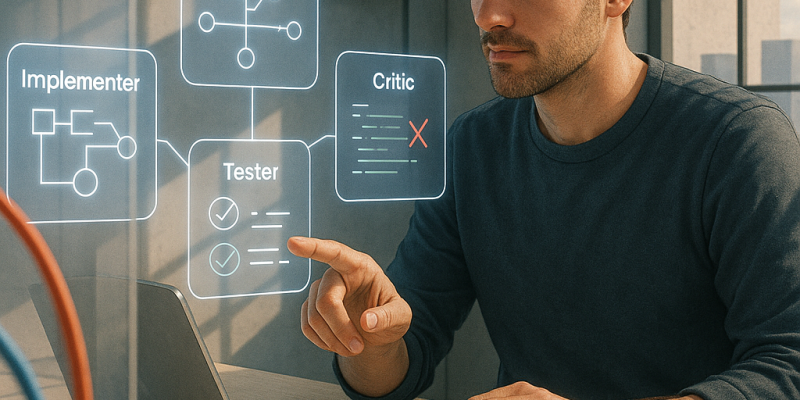
If messy backfills, one-off prod fixes, and overflowing tickets keep you up, here’s what changed in the last two weeks and what to do next. Vendors and OSS shipped agentic, multi-agent coding features late Dec (Anthropic 2025-12-23; Cursor, Windsurf; AutoGen 0.4 on 2025-12-22; LangGraph 0.2 on 2025-12-21) so LLMs can plan, implement, test, and iterate across repos. On-device moves accelerated (Apple Private Cloud Compute update 2025-12-26; Qualcomm/MediaTek benchmarks mid‐Dec), making private, low-latency assistants practical. Data and migration tooling added LLM helpers (Snowflake Dynamic Tables 2025-12-23; Databricks Delta Live Tables 2025-12-21) but expect humans to own a PDCVR loop (Plan, Do, Check, Verify, Rollback). Database change management and just‐in‐time audited access got product updates (PlanetScale/Neon, Liquibase, Flyway, Teleport, StrongDM in Dec). Action: adopt agentic workflows cautiously, run AI drafts through your PDCVR and PR/audit gates, and prioritize on‐device options for sensitive code.

Why Small, On‐Device "Distilled" AI Will Replace Cloud Giants
Published Dec 6, 2025
Cloud inference bills and GPU scarcity are squeezing margins — want a cheaper, faster alternative? Over the past two weeks research releases, open‐source projects, and hardware roadmaps have pushed the industrialization of distilled, on‐device and domain‐specific AI. Large teachers (100B+ params) are being compressed into student models (often 1–3B) via int8/int4/binary quantization and pruning to meet targets like <50 ms latency and <1 GB RAM, running on NPUs and compact accelerators (tens of TOPS). That matters for fintech, trading, biotech, devices, and developer tooling: lower latency, better privacy, easier regulatory proofs, and offline operation. Immediate actions: build distillation + evaluation pipelines, adopt model catalogs and governance, and treat model SBOMs as security hygiene. Watch for risks: harder benchmarking, fragmentation, and supply‐chain tampering. Mastering this will be a 2–3 year competitive edge.

Meet the AI Agents That Build, Test, and Ship Your Code
Published Dec 6, 2025
Tired of bloated “vibe-coded” PRs? Here’s what you’ll get: the change, why it matters, and immediate actions. Over the past two weeks multiple launches and previews showed AI-native coding agents moving out of the IDE into the full software delivery lifecycle—planning, implementing, testing and iterating across entire repositories (often indexed at millions of tokens). These agentic dev environments integrate with test runners, linters and CI, run multi-agent workflows (planner, coder, tester, reviewer), and close the loop from intent to a pull request. That matters because teams can accelerate prototype-to-production cycles but must manage costs, latency and trust: expect hybrid or self-hosted models, strict zoning (green/yellow/red), test-first workflows, telemetry and governance (permissions, logs, policy). Immediate steps: make codebases agent-friendly, require staged approvals for critical systems, build prompt/pattern libraries, and treat agents as production services to monitor and re-evaluate.

Edge AI Meets Quantum: MMEdge and IBM Reshape the Future
Published Nov 19, 2025
Latency killing your edge apps? Read this: two near-term advances could change where AI runs. MMEdge (arXiv:2510.25327) is a recent on‐device multimodal framework that pipelines sensing and encoding, uses temporal aggregation and speculative skipping to start inference before full inputs arrive, and—tested in a UAV and on standard datasets—cuts end‐to‐end latency while keeping accuracy. IBM unveiled Nighthawk (120 qubits, 218 tunable couplers; up to 5,000 two‐qubit gates; testing late 2025) and Loon (112 qubits, six‐way couplers) as stepstones toward fault‐tolerant QEC and a Starling system by 2029. Why it matters to you: faster, deterministic edge decisions for AR/VR, drones, medical wearables; new product and investment opportunities; and a need to track edge latency benchmarks, early quantum demos, and hardware–software co‐design.