
Agentic AI Is Taking Over Engineering: From Code to Incidents and Databases
Published Jan 4, 2026
If messy backfills, one-off prod fixes, and overflowing tickets keep you up, here’s what changed in the last two weeks and what to do next. Vendors and OSS shipped agentic, multi-agent coding features late Dec (Anthropic 2025-12-23; Cursor, Windsurf; AutoGen 0.4 on 2025-12-22; LangGraph 0.2 on 2025-12-21) so LLMs can plan, implement, test, and iterate across repos. On-device moves accelerated (Apple Private Cloud Compute update 2025-12-26; Qualcomm/MediaTek benchmarks mid‐Dec), making private, low-latency assistants practical. Data and migration tooling added LLM helpers (Snowflake Dynamic Tables 2025-12-23; Databricks Delta Live Tables 2025-12-21) but expect humans to own a PDCVR loop (Plan, Do, Check, Verify, Rollback). Database change management and just‐in‐time audited access got product updates (PlanetScale/Neon, Liquibase, Flyway, Teleport, StrongDM in Dec). Action: adopt agentic workflows cautiously, run AI drafts through your PDCVR and PR/audit gates, and prioritize on‐device options for sensitive code.

AI as Engineer: From Autocomplete to Process-Aware Collaborator
Published Jan 3, 2026
Your team’s code is fast but fragile — in the last two weeks engineers, not vendors, published practical patterns to make LLMs safe and productive. On 2026‐01‐03 a senior engineer released PDCVR (Plan‐Do‐Check‐Verify‐Retrospect) using Claude Code and GLM‐4.7 with prompts and sub‐agents on GitHub; it embeds planning, TDD, build verification, and retrospectives as an AI‐native SDLC layer for risk‐sensitive systems. On 2026‐01‐02 others showed folder‐level repo manifests plus a prompt‐rewriting meta‐agent that cut routine 1–2‐day tasks from ~8 hours to ~2–3 hours. Tooling shifted too: DevScribe (site checked 2026‐01‐03) offers executable, offline docs with DBs, diagrams, and API testing. Engineers also pushed reusable data‐migration patterns, highlighted the “alignment tax,” and prototyped Slack/Jira/Sentry aggregators. Bottom line: treat AI as a process participant — build frameworks, guardrails, and observability now.

AI Is Becoming the Operating System for Software Teams
Published Jan 3, 2026
Drowning in misaligned work and slow delivery? In the last two weeks senior engineers sketched exactly what’s changing and why it matters: AI is becoming an operating system for software teams, and this summary tells you what to expect and do. Teams are shifting from ad‐hoc prompting to repeatable, auditable frameworks like Plan–Do–Check–Verify–Retrospect (PDCVR) (implemented on Claude Code + GLM‐4.7; prompts and sub‐agents open‐sourced, Reddit 2026‐01‐03), cutting error loops with TDD and build‐verification agents. Hierarchical agents plus folder manifests trim a task from ~8 hours to ~2–3 hours (20‐minute prompt, 2–3 feedback loops, ~1 hour testing). Tools like DevScribe collapse docs, queries, diagrams, and API tests into executable workspaces. Data backfills need platform controllers with checkpointing and rollforward/rollback. The biggest ops win: alignment‐aware dashboards and AI todo aggregators to expose scope creep and speed decisions. Immediate takeaway: harden workflows, add agent tiers, and invest in alignment tooling now.
How Teams Industrialize AI: Agentic Workflows, Executable Docs, and Coordination
Published Jan 3, 2026
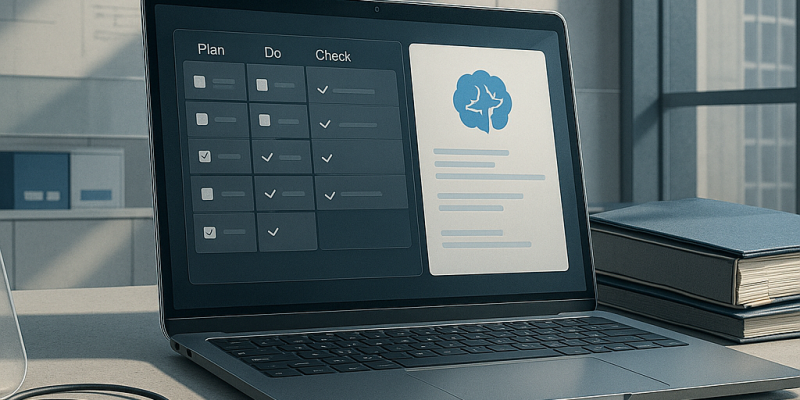
Tired of wasted engineering hours and coordination chaos? Over the last two weeks (Reddit threads dated 2026‐01‐02 and 2026‐01‐03, plus GitHub and DevScribe docs), engineering communities shifted from debating models to industrializing AI‐assisted development — practical frameworks, agentic workflows, executable docs, and migration patterns. Key moves: a Plan–Do–Check–Verify‐Retrospect (PDCVR) process using Claude Code and GLM‐4.7 with prompts and sub‐agents on GitHub; multi‐level agents plus folder priors that cut a typical 1–2 day task from ~8 engineer hours to ~2–3 hours; DevScribe’s offline, executable docs for DBs and APIs; and calls to build reusable data‐migration and coordination‐aware tooling to lower the “alignment tax.” If you lead engineering, treat these patterns as operational playbooks now — adopt PDCVR, folder manifests, executable docs, and attention‐aggregators to secure measurable advantage over the next 12–24 months.

Meet the AI Agents That Build, Test, and Ship Your Code
Published Dec 6, 2025
Tired of bloated “vibe-coded” PRs? Here’s what you’ll get: the change, why it matters, and immediate actions. Over the past two weeks multiple launches and previews showed AI-native coding agents moving out of the IDE into the full software delivery lifecycle—planning, implementing, testing and iterating across entire repositories (often indexed at millions of tokens). These agentic dev environments integrate with test runners, linters and CI, run multi-agent workflows (planner, coder, tester, reviewer), and close the loop from intent to a pull request. That matters because teams can accelerate prototype-to-production cycles but must manage costs, latency and trust: expect hybrid or self-hosted models, strict zoning (green/yellow/red), test-first workflows, telemetry and governance (permissions, logs, policy). Immediate steps: make codebases agent-friendly, require staged approvals for critical systems, build prompt/pattern libraries, and treat agents as production services to monitor and re-evaluate.

U.S. Mandates AI Governance and Procurement Reforms via M-25-21, M-25-22
Published Nov 16, 2025
Two federal memoranda—OMB M-25-21 and M-25-22—redefine U.S. executive-branch AI governance and procurement. M-25-21 requires agencies and independent regulators to remove barriers to AI adoption, maximize reuse of federal code, create internal AI governance boards, join an interagency CAIO Council, designate a Chief AI Officer within 60 days, and apply enhanced oversight to “high-impact” AI. M-25-22 tightens acquisition: procurement documents issued after October 1, 2025 must assess “high-impact” status upfront and include testing, oversight, interoperability and data-rights terms; agencies have 270 days to update acquisition policies and GSA will issue templates in 100–200 days. These directives force pre-validation of AI for rights- and safety-affecting uses, shift compliance burdens onto agencies and vendors, and impose an aggressive implementation timeline.