Agentic AI Is Taking Over Engineering: From Code to Incidents and Databases

Agentic AI Is Taking Over Engineering: From Code to Incidents and Databases

Published Jan 4, 2026

If messy backfills, one-off prod fixes, and overflowing tickets keep you up, here’s what changed in the last two weeks and what to do next. Vendors and OSS shipped agentic, multi-agent coding features late Dec (Anthropic 2025-12-23; Cursor, Windsurf; AutoGen 0.4 on 2025-12-22; LangGraph 0.2 on 2025-12-21) so LLMs can plan, implement, test, and iterate across repos. On-device moves accelerated (Apple Private Cloud Compute update 2025-12-26; Qualcomm/MediaTek benchmarks mid‐Dec), making private, low-latency assistants practical. Data and migration tooling added LLM helpers (Snowflake Dynamic Tables 2025-12-23; Databricks Delta Live Tables 2025-12-21) but expect humans to own a PDCVR loop (Plan, Do, Check, Verify, Rollback). Database change management and just‐in‐time audited access got product updates (PlanetScale/Neon, Liquibase, Flyway, Teleport, StrongDM in Dec). Action: adopt agentic workflows cautiously, run AI drafts through your PDCVR and PR/audit gates, and prioritize on‐device options for sensitive code.

Agentic AI transforms engineering workflows with multi-agent coding and automation

What happened

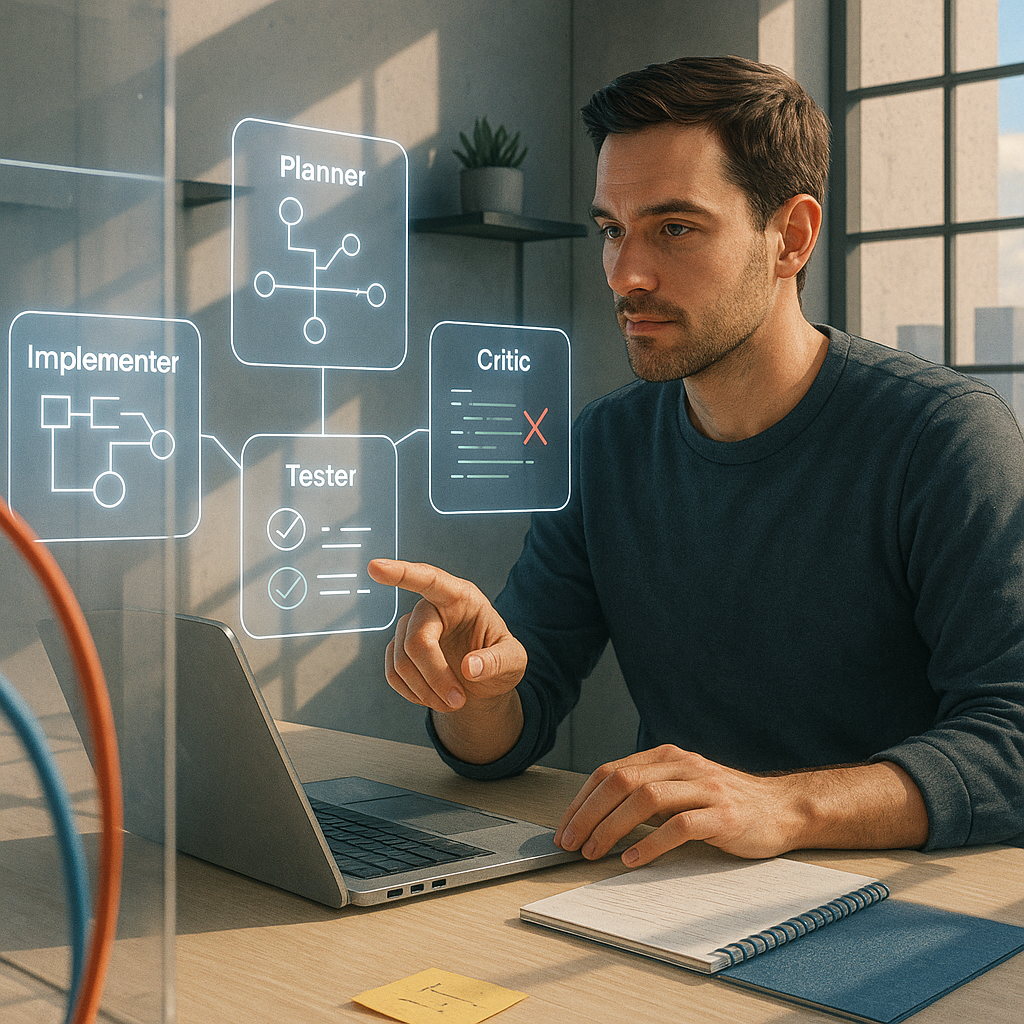
Over the past two weeks, a cluster of vendor updates, open‐source releases, and community posts moved agentic multi‐agent coding and AI‐augmented engineering workflows from demos toward repeatable practice. Notable items: Anthropic published multi‐step, tool‐using agent examples (Claude 3.5); Cursor and Windsurf added multi‐file agent and plan features; Microsoft’s AutoGen and LangGraph introduced persistent agent state and planner→implementer→critic→tester graphs. Parallel shifts include on‐device LLM execution (Apple Private Cloud Compute guidance, Qualcomm/MediaTek benchmarks), AI assistance for data backfills (Snowflake, Databricks, dbt/Astronomer proofs‐of‐concept), stricter production DB change controls (PlanetScale, Neon, Liquibase, Flyway), and AI‐driven task/incident orchestration across Jira, Slack, Sentry, etc.

Why this matters

Practical engineering workflows: these changes mark a move from single‐query code generation to agent‐managed change—LLMs proposing, applying, testing, and iterating on repo‐wide edits under human supervision.

  • Scale & risk: on‐device models and vendor controls lower privacy and latency barriers, making agentic workflows viable for proprietary code and sensitive domains.
  • Process shift: platform and security updates push ephemeral, auditable, PR‐driven database changes and CI‐integrated migrations instead of ad‐hoc prod edits.
  • Productivity & reliability: AI summarization and task orchestration aim to reduce coordination overhead in incidents and backlog management, while LLMs drafting migration SQL or backfill plans increase repeatability—but humans still set SLOs, approvals, and rollbacks.
  • Collectively, these moves embed AI into core engineering operations (code, data, incidents, access), changing tooling, controls, and the skills that travel between full‐time and contracting work.

Sources

  • Anthropic documentation (tool‐using agents): https://www.anthropic.com/docs
  • PostgreSQL 17 release notes: https://www.postgresql.org/docs/release/17/
  • Snowflake Dynamic Tables documentation: https://docs.snowflake.com/en/user-guide/dynamic-tables.html
  • PlanetScale branching docs: https://www.planetscale.com/docs/branching

Advances in On-Device LLMs Enable Fast, Private AI with Low Latency

  • On-device LLM capacity — 7B–8B parameters, December 2025 Qualcomm and MediaTek benchmarks show smartphone NPUs can run assistants locally with interactive latency, enabling private, low-latency agent workflows.
  • Local model quantization — 4-bit, Ollama and Hugging Face updates enable efficient packaging of LLMs for laptops and small servers with minimal setup to speed local inference and reduce cloud dependence.

Mitigating Risks and Enhancing Compliance in AI-Powered Development

  • Agent-managed code/DB change control gaps — Multi-agent dev (Anthropic/Cursor/Windsurf, Dec 2025–Jan 2026) and DB tooling now let agents and humans propose/apply diffs and one-off writes; weak PR/JIT/audit controls risk faulty changes and compliance findings across repos and production databases. Turn this into an opportunity by standardizing PR-driven, auditable, ephemeral access and versioned scripts (PlanetScale/Neon, Liquibase/Flyway, Teleport/StrongDM) to speed safe changes and simplify audits.
  • Hybrid on-device/cloud LLM privacy & compliance exposure — Apple Private Cloud Compute offloads larger tasks to Apple datacenters while claiming non‐inspectability; developers using on-device agents may still trigger cloud fallback (est.), risking proprietary code leaving devices in regulated settings. Known unknown: Market/regulatory acceptance of PCC guarantees and whether 7B–8B on-device models can meet quality/latency to avoid offload. Build local-first agent stacks (Ollama/HF TGI) with explicit data-routing policies to win privacy‐sensitive enterprise deals.
  • AI-augmented data migrations/backfills reliability risk — LLMs now draft backfill SQL and stepwise plans in Snowflake/Databricks/dbt/Astronomer; errors can corrupt data and blow SLOs, especially in fintech/healthcare contexts noted in the article. Known unknown: Real-world error/rollback rates of PDCVR loops at scale. Use AI to propose and humans to approve, with lineage-aware tests, idempotency, expectations, retries, and rollbacks to raise throughput while bounding blast radius.

Key AI and Coding Innovations Driving Software Development in Early 2026

PeriodMilestoneImpact
Jan 2026 (TBD)Cursor/Windsurf next releases on multi-agent coding: autonomous multi-file edits, test iteration.Production repos see faster refactors under agent-managed change and tighter feedback.
Jan 2026 (TBD)Anthropic expands examples for tool-using agents and long-horizon software workflows.Standardized planner→implementer→critic→tester patterns accelerate enterprise adoption.
Q1 2026 (TBD)Ollama/Hugging Face broaden 4-bit packages for 7B–8B on-device models.Laptops/servers gain lower-latency, private coding assistants with minimal setup.
Q1 2026 (TBD)Apple extends hybrid Private Cloud Compute to more developer-facing features.More on-device summaries and Xcode suggestions without exposing proprietary code.
Q1 2026 (TBD)Snowflake/Databricks/dbt/Astronomer move AI-assisted migrations from PoC to pilots.PDCVR controls with AI-drafted SQL, checkpoints, rollback adopted in pipelines.

AI in Real Workflows: Quiet Revolution or Just More Guardrails and Governance?

Optimists will say the dam finally broke: multi-agent coding is leaving demos for “agent-managed change” in real repos, on-device models are becoming private coprocessors, and AI is showing up where work actually happens—migrations, incidents, and tickets. Skeptics will counter that the headline isn’t autonomy, it’s governance: PR-driven database writes, PDCVR loops for backfills, and zero-trust, just-in-time access put the brakes exactly where risk lives. Short term, throughput jumps as planners, implementers, critics, and testers coordinate under human supervision; long term, complexity and scale still bite—think JSONB consolidation versus MongoDB at high write volumes. The risky bet isn’t giving agents keyboards—it’s trusting workflows you can’t audit. Even boosters concede the guardrails: human approvals, SLOs, and fallbacks to larger cloud models remain non‐optional.

Here’s the twist: the fastest way to ship more with agents is to make the process more boring, not the models more bold. The real shift is that AI joins code review, lineage analysis, and incident triage as a first-class participant, while branching databases, versioned migration scripts, and persistent-state agents turn messy change into trackable proposals. Watch for IDEs, CI, and “shadow branches” to become the control surface: agents that draft PRs, migrations that behave like tested runbooks, and local coprocessors handling the first pass before cloud escalation. That empowers SREs, data engineers, and senior devs who can wire plans, checks, and rollbacks into everyday tooling—and it’s where the next advantage will compound. In the end, progress will look like cleaner diffs and quieter war rooms. The future arrives as a checklist, not a chatbot.