
AI Embeds Everywhere: Agentic Workflows, On‐Device Inference, Enterprise Tooling
Published Jan 4, 2026
Still juggling tool sprawl and model hype? In the last two weeks (Dec 19–Jan 3) major vendors shifted focus from one‐off models to systems you’ll have to integrate: OpenAI expanded Deep Research (Dec 19) to run multi‐hour agentic research runs; Qualcomm benchmarked Snapdragon NPUs at 75+ TOPS (Dec 23) as Google and Apple pushed on‐device inference; Meta and Mistral published distillation recipes (Dec 26–29) to compress 70B models into 8–13B variants for on‐prem use; observability tools (Arize, W&B, LangSmith) added agent traces and evals (Dec 23–29); quantum vendors realigned to logical‐qubit roadmaps (IBM et al., Dec 22–29); and biotech firms (Insilico, Recursion) reported AI‐driven pipelines and 30 PB of imaging data (Dec 26–27). Why it matters: expect hybrid cloud/device stacks, tighter governance, lower inference cost, and new platform engineering priorities—start mapping model, hardware, and observability paths now.
Agentic AI Is Taking Over Engineering: From Code to Incidents and Databases
Published Jan 4, 2026
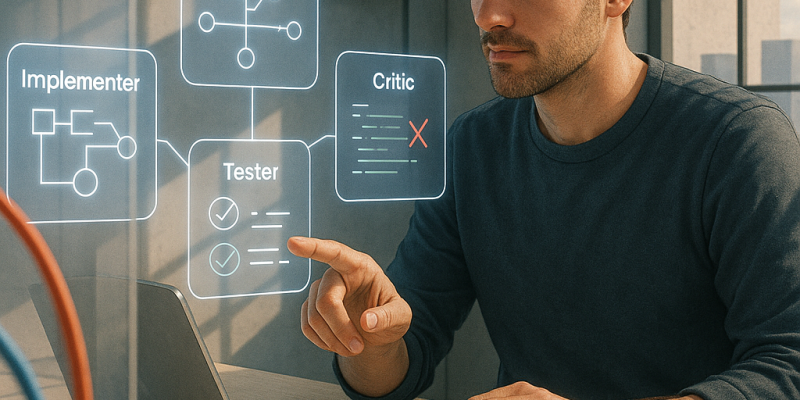
If messy backfills, one-off prod fixes, and overflowing tickets keep you up, here’s what changed in the last two weeks and what to do next. Vendors and OSS shipped agentic, multi-agent coding features late Dec (Anthropic 2025-12-23; Cursor, Windsurf; AutoGen 0.4 on 2025-12-22; LangGraph 0.2 on 2025-12-21) so LLMs can plan, implement, test, and iterate across repos. On-device moves accelerated (Apple Private Cloud Compute update 2025-12-26; Qualcomm/MediaTek benchmarks mid‐Dec), making private, low-latency assistants practical. Data and migration tooling added LLM helpers (Snowflake Dynamic Tables 2025-12-23; Databricks Delta Live Tables 2025-12-21) but expect humans to own a PDCVR loop (Plan, Do, Check, Verify, Rollback). Database change management and just‐in‐time audited access got product updates (PlanetScale/Neon, Liquibase, Flyway, Teleport, StrongDM in Dec). Action: adopt agentic workflows cautiously, run AI drafts through your PDCVR and PR/audit gates, and prioritize on‐device options for sensitive code.

AI Is Becoming the Operating System for Software Teams
Published Jan 3, 2026
Drowning in misaligned work and slow delivery? In the last two weeks senior engineers sketched exactly what’s changing and why it matters: AI is becoming an operating system for software teams, and this summary tells you what to expect and do. Teams are shifting from ad‐hoc prompting to repeatable, auditable frameworks like Plan–Do–Check–Verify–Retrospect (PDCVR) (implemented on Claude Code + GLM‐4.7; prompts and sub‐agents open‐sourced, Reddit 2026‐01‐03), cutting error loops with TDD and build‐verification agents. Hierarchical agents plus folder manifests trim a task from ~8 hours to ~2–3 hours (20‐minute prompt, 2–3 feedback loops, ~1 hour testing). Tools like DevScribe collapse docs, queries, diagrams, and API tests into executable workspaces. Data backfills need platform controllers with checkpointing and rollforward/rollback. The biggest ops win: alignment‐aware dashboards and AI todo aggregators to expose scope creep and speed decisions. Immediate takeaway: harden workflows, add agent tiers, and invest in alignment tooling now.
AI-Native Trading: Models, Simulators, and Agentic Execution Take Over
Published Dec 6, 2025
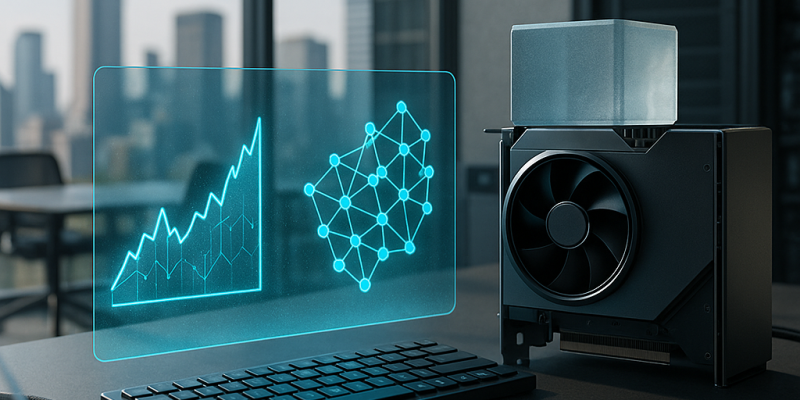
Worried you’ll be outpaced by AI-native trading stacks? Read this and you’ll know what changed and what to do. In the past two weeks industry moves and research have fused large generative models, high‐performance market simulation, and low‐latency execution: NVIDIA says over 50% of new H100/H200 cluster deals in financial services list trading and generative AI as primary workloads (NVIDIA, 2025‐11), and cloud providers updated GPU stacks in 2025‐11–2025‐12. New tools can generate tens of thousands of synthetic years of limit‐order‐book data on one GPU, train RL agents against co‐evolving adversaries, and oversample crisis scenarios—shifting training from historical backtests to simulated multiverses. That raises real risks (opaque RL policies, strategy monoculture from LLM‐assisted coding, data leakage). Immediate actions: inventory generative dependencies, segregate research vs production models, enforce access controls, use sandboxed shadow mode, and monitor GPU usage, simulator open‐sourcing, and AI‐linked market anomalies over the next 6–12 months.

Google’s Antigravity Turns Gemini 3 Pro into an Agent-First Coding IDE
Published Nov 18, 2025
Worried about opaque AI agents silently breaking builds? Here’s what happened, why it matters, and what to do next: on 2025-11-18 Google unveiled Antigravity (public preview), an agent-first coding environment layered on Gemini 3 Pro (Windows/macOS/Linux) that also supports Claude Sonnet 4.5 and GPT-OSS; it embeds agents in IDEs/terminals with Editor and Manager views, persistent memory, human feedback, and verifiable Artifacts (task lists, plans, screenshots, browser recordings). Gemini 3 Pro previews in November 2025 showed 200,000- and 1,000,000-token context windows, enabling long-form and multimodal workflows. This shifts developer productivity, trust, and platform architecture—and raises risks (overreliance, complexity, cost, privacy). Immediate actions: invest in prompt design, agent orchestration, observability/artifact storage, and monitor regional availability, benchmark comparisons, and pricing.