From Copilots to Pipelines: AI Enters Professional Infrastructure
Published Jan 4, 2026
Tired of copilots that only autocomplete? In the two weeks from 2024‐12‐22 to 2025‐01‐04 the market moved: GitHub Copilot Workspace (public preview, rolling since 2024‐12‐17) and Sourcegraph Cody 1.0 pushed agentic, repo‐scale edits and plan‐execute‐verify loops; Qualcomm, Apple, and mobile LLaMA work targeted sub‐10B on‐device latency; IBM, Quantinuum, and PsiQuantum updated roadmaps toward logical qubits (late‐December updates); DeepMind’s AlphaFold 3 tooling and OpenFold patched production workflows; Epic/Nuance DAX Copilot and Mayo Clinic posted deployments reducing documentation time; exchanges and FINRA updated AI surveillance work; LangSmith, Arize Phoenix and APM vendors expanded LLM observability; and hiring data flagged platform‐engineering demand. Why it matters: AI is being embedded into operations, so expect impacts on code review, test coverage, privacy architecture, auditability, and staffing. Immediate takeaway: prioritize observability, audit logs, on‐device‐first designs, and platform engineering around AI services.

AI Embedded: On‐Device Assistants, Agentic Workflows, and Industry Impact
Published Jan 4, 2026
Worried AI is still just a research toy? Here’s a two‐week briefing so you know what to do next. Major vendors pushed AI into devices and workflows: Apple (Dec 16) rolled out on‐device models in iOS 18.2 betas, Google tightened Gemini into Android and Workspace (Dec 18–20), and OpenAI tuned GPT‐4o mini and tool calls for low‐latency apps (Dec). Teams are building agentic SDLCs—PDCVR loops surfaced on Reddit (Jan 3) and GitHub reports AI suggestions accepted in over 30% of edits on some repos. In biotech, AI‐designed drugs hit Phase II (Insilico, Dec 19) and Exscientia cited faster cycles (Dec 17); in vivo editing groups set 2026 human data targets. Payments and markets saw FedNow adoption by hundreds of banks (Dec 23) and exchanges pushing low‐latency feeds. Immediate implications: adopt hybrid on‐device/cloud models, formalize agent guardrails, update procurement for memory‐safe tech, and prioritize reliability for real‐time rails.
Agentic AI Is Taking Over Engineering: From Code to Incidents and Databases
Published Jan 4, 2026
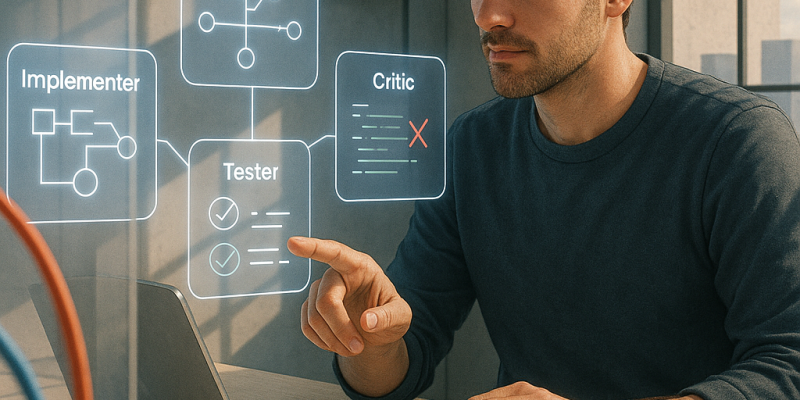
If messy backfills, one-off prod fixes, and overflowing tickets keep you up, here’s what changed in the last two weeks and what to do next. Vendors and OSS shipped agentic, multi-agent coding features late Dec (Anthropic 2025-12-23; Cursor, Windsurf; AutoGen 0.4 on 2025-12-22; LangGraph 0.2 on 2025-12-21) so LLMs can plan, implement, test, and iterate across repos. On-device moves accelerated (Apple Private Cloud Compute update 2025-12-26; Qualcomm/MediaTek benchmarks mid‐Dec), making private, low-latency assistants practical. Data and migration tooling added LLM helpers (Snowflake Dynamic Tables 2025-12-23; Databricks Delta Live Tables 2025-12-21) but expect humans to own a PDCVR loop (Plan, Do, Check, Verify, Rollback). Database change management and just‐in‐time audited access got product updates (PlanetScale/Neon, Liquibase, Flyway, Teleport, StrongDM in Dec). Action: adopt agentic workflows cautiously, run AI drafts through your PDCVR and PR/audit gates, and prioritize on‐device options for sensitive code.
From PDCVR to Agent Stacks: Inside the AI Native Engineering Operating Model
Published Jan 3, 2026
Losing engineer hours to scope creep and brittle AI hacks? Between Jan 2–3, 2026 practitioners published concrete patterns showing AI is being industrialized into an operating model you can copy. You get a PDCVR loop (Plan–Do–Check–Verify–Retrospect) around LLM coding, repo‐governed, model‐agnostic checks, and Claude Code sub‐agents for build and test; a three‐tier agent stack with folder‐level manifests and a prompt‐rewriting meta‐agent that cut typical 1–2 day tickets from ≈8 hours to ≈2–3 hours; DevScribe‐style offline workspaces that co‐host code, schemas, queries, diagrams and API tests; standardized, idempotent backfill patterns for auditable migrations; and “coordination‐aware” agents to measure the alignment tax. If you want short‐term productivity and auditable risk controls, start piloting PDCVR, repo policies, an executable workspace, and migration primitives now.

From PDCVR to Agent Stacks: The AI‐Native Engineering Blueprint
Published Jan 3, 2026
Been burned by buggy AI code or chaotic agents? Over the past 14 days, practitioners sketched an AI‐native operating model you can use as a blueprint. A senior engineer (2026‐01‐03) formalized PDCVR—Plan, Do, Check, Verify, Retrospect—using Claude Code with GLM‐4.7 to enforce TDD, small scoped loops, agented verification, and recorded retrospectives. Another thread (2026‐01‐02) shows multi‐level agent stacks: folder‐level manifests plus a meta‐agent that turns short prompts into executable specs, cutting typical 1–2 day tasks from ~8 hours to ≈2–3 hours. DevScribe (docs 2026‐01‐03) offers an offline, executable workspace for code, queries, diagrams and tests. Teams also frame data backfills as platform work (2026‐01‐02) and treat coordination drag as an “alignment tax” to be monitored by sentry agents (2026‐01‐02–03). The immediate question isn’t “use agents?” but “which operating model and metrics will you embed?”

AI Rewrites Engineering: From Autocomplete to Operating System
Published Jan 3, 2026
Engineers are reporting a productivity and governance breakthrough: in the last 14 days (posts dated 2026‐01‐02/03) practitioners described a repeatable blueprint—PDCVR (Plan–Do–Check–Verify–Retrospect), folder‐level policies, meta‐agents, and execution workspaces like DevScribe—that moves LLMs and agents from “autocomplete” to an engineering operating model. You get concrete wins: open‐sourced PDCVR prompts and Claude Code agents on GitHub (2026‐01‐03), Plan+TDD discipline, folder manifests that prevent architectural drift, and a meta‐agent that cuts a typical 1–2 day ticket from ≈8 hours to ~2–3 hours. Teams also framed data backfills as governed workflows and named “alignment tax” as a coordination problem agents can monitor. If you care about velocity, risk, or compliance in fintech/trading/digital‐health, the immediate takeaway is clear: treat AI as an architectural question—adopt PDCVR, folder priors, executable docs, governed backfills, and alignment‐watching agents.

From Copilot to Co‐Worker: Building an Agentic AI Operating Model
Published Jan 3, 2026
Are you watching engineering time leak into scope creep and late integrations? New practitioner posts (Reddit, Jan 2–3, 2026) show agentic AI is moving from demos to an operating model you can deploy: Plan–Do–Check–Verify–Retrospect (PDCVR) loops run with Claude Code + GLM‐4.7 and open‐source prompt and sub‐agent templates (GitHub, Jan 3, 2026). Folder‐level priors plus a prompt‐rewriting meta‐agent cut typical 1–2 day fixes from ~8 hours to ~2–3 hours. DevScribe‐style executable workspaces, data‐backfill platforms, and agents that audit coordination and alignment tax complete the stack for regulated domains like fintech and digital‐health‐ai. The takeaway: it’s no longer whether to use AI, but how to architect PDCVR, meta‐agents, folder policies, and verification workspaces into your operating model.