Agentic AI Is Taking Over Engineering: From Code to Incidents and Databases
Published Jan 4, 2026
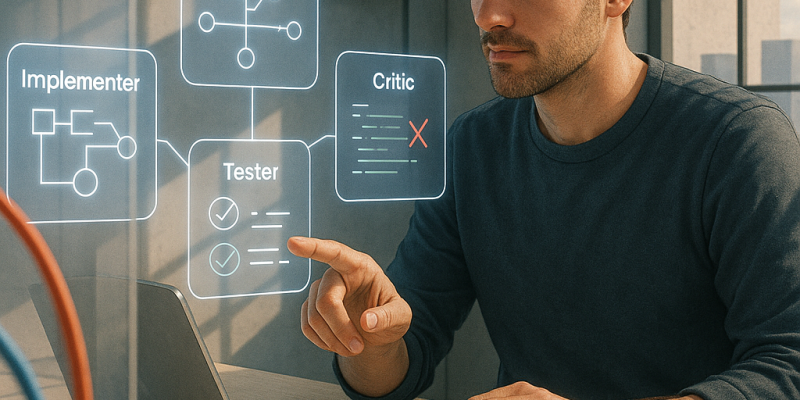
If messy backfills, one-off prod fixes, and overflowing tickets keep you up, here’s what changed in the last two weeks and what to do next. Vendors and OSS shipped agentic, multi-agent coding features late Dec (Anthropic 2025-12-23; Cursor, Windsurf; AutoGen 0.4 on 2025-12-22; LangGraph 0.2 on 2025-12-21) so LLMs can plan, implement, test, and iterate across repos. On-device moves accelerated (Apple Private Cloud Compute update 2025-12-26; Qualcomm/MediaTek benchmarks mid‐Dec), making private, low-latency assistants practical. Data and migration tooling added LLM helpers (Snowflake Dynamic Tables 2025-12-23; Databricks Delta Live Tables 2025-12-21) but expect humans to own a PDCVR loop (Plan, Do, Check, Verify, Rollback). Database change management and just‐in‐time audited access got product updates (PlanetScale/Neon, Liquibase, Flyway, Teleport, StrongDM in Dec). Action: adopt agentic workflows cautiously, run AI drafts through your PDCVR and PR/audit gates, and prioritize on‐device options for sensitive code.

How AI Is Rewiring Software Engineering: PDCVR, Agents, Executable Workspaces
Published Jan 3, 2026
What if a typical 1–2 day engineering task drops from ~8 hours to ~2–3 hours? In the last two weeks practitioners (Reddit threads dated Jan 2–3, 2026) showed how: an AI‐native SDLC loop called PDCVR (Plan‐Do‐Check‐Verify‐Retrospect) built on Claude Code and GLM‐4.7, folder‐level priors plus a prompt‐rewriting meta‐agent, executable workspaces like DevScribe, repeatable data‐migration/backfill patterns, and tools to surface the “alignment tax.” PDCVR forces repo scans, TDD plans, small diffs, sub‐agents (open‐sourced in .claude on GitHub, Jan 3, 2026) to run builds/tests, and LLM retrospectives. Measured gains: common fixes go from ~8 hours to ~2–3 hours with 20‐minute prompts and short PR loops. Bottom line: teams in fintech, healthtech, trading and regulated sectors should adopt these operating models—PDCVR, multi‐level agents, executable docs, migration frameworks—and tie them to speed, quality, and risk metrics.

Inside the AI Operating Fabric Transforming Engineering: PDCVR, Agents, Workspaces
Published Jan 3, 2026
Losing time to scope creep and brittle AI output? In the past two weeks engineers documented concrete practices showing AI is becoming the operating fabric of engineering work: PDCVR (Plan–Do–Check–Verify–Retrospect) — documented 2026‐01‐03 for Claude Code and GLM‐4.7 with GitHub prompt templates — gives an AI‐native SDLC wrapper; multi‐agent hierarchies (folder‐level instructions plus a prompt‐rewriting meta‐agent) cut typical 1–2 day monorepo tasks from ~8 hours to ~2–3 hours (reported 2026‐01‐02); DevScribe (2026‐01‐03) offers executable docs (DB queries, diagrams, REST client, offline‐first); engineers pushed reusable data backfill/migration patterns (2026‐01‐02); posts flagged an “alignment tax” on throughput (2026‐01‐02/03); and founders prototyped AI todo routers aggregating Slack/Jira/Sentry (2026‐01‐02). Immediate takeaway: implement PDCVR‐style loops, agent hierarchies, executable workspaces and alignment‐aware infra — and measure impact.
AI as Engineer: From Autocomplete to Process-Aware Collaborator
Published Jan 3, 2026
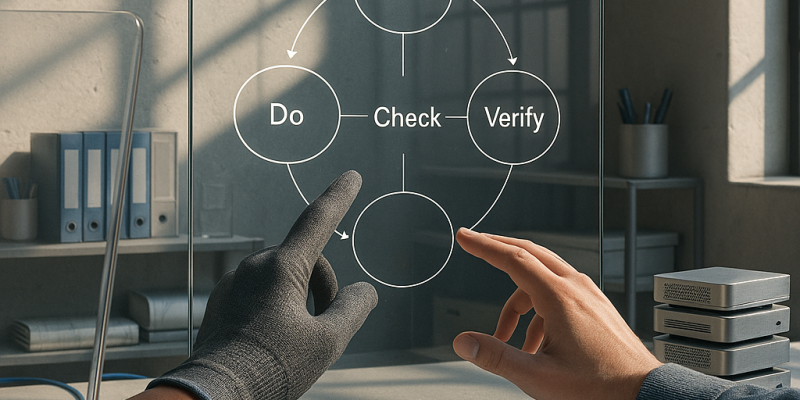
Your team’s code is fast but fragile — in the last two weeks engineers, not vendors, published practical patterns to make LLMs safe and productive. On 2026‐01‐03 a senior engineer released PDCVR (Plan‐Do‐Check‐Verify‐Retrospect) using Claude Code and GLM‐4.7 with prompts and sub‐agents on GitHub; it embeds planning, TDD, build verification, and retrospectives as an AI‐native SDLC layer for risk‐sensitive systems. On 2026‐01‐02 others showed folder‐level repo manifests plus a prompt‐rewriting meta‐agent that cut routine 1–2‐day tasks from ~8 hours to ~2–3 hours. Tooling shifted too: DevScribe (site checked 2026‐01‐03) offers executable, offline docs with DBs, diagrams, and API testing. Engineers also pushed reusable data‐migration patterns, highlighted the “alignment tax,” and prototyped Slack/Jira/Sentry aggregators. Bottom line: treat AI as a process participant — build frameworks, guardrails, and observability now.

PDCVR and Agentic Workflows Industrialize AI‐Assisted Software Engineering
Published Jan 3, 2026
If your team is losing a day to routine code changes, listen: Reddit posts from 2026‐01‐02/03 show practitioners cutting typical 1–2‐day tasks from ~8 hours to about 2–3 hours by combining a Plan–Do–Check–Verify–Retrospect (PDCVR) loop with multi‐level agents, and this summary tells you what they did and why it matters. PDCVR (reported 2026‐01‐03) runs in Claude Code with GLM‐4.7, forces RED→GREEN TDD in planning, keeps small diffs, uses build‐verification and role subagents (.claude/agents) and records lessons learned. Separate posts (2026‐01‐02) show folder‐level instructions and a prompt‐rewriting meta‐agent turning vague requests into high‐fidelity prompts, giving ~20 minutes to start, 10–15 minutes per PR loop, plus ~1 hour for testing. Tools like DevScribe make docs executable (DB queries, ERDs, API tests). Bottom line: teams are industrializing AI‐assisted engineering; your immediate next step is to instrument reproducible evals—PR time, defect rates, rollbacks—and correlate them with AI use.

The Shift to Domain‐Specific Foundation Models Every Tech Leader Must Know
Published Dec 6, 2025
If your teams still bet on generic LLMs, you're facing diminishing returns — over the last two weeks the industry has accelerated toward enterprise‐grade, domain‐specific foundation models. You’ll get why this matters, what these stacks look like, and what to watch next. Three forces drove the shift: generic models stumble on niche terminology and protocol rules; high‐quality domain datasets have matured over the last 2–3 years; and tooling for safe adaptation (secure connectors, parameter‐efficient tuning like LoRA/QLoRA, retrieval, and domain evals) is now enterprise ready. Practically, stacks layer a base foundation model, domain pretraining/adaptation, retrieval/tools (backtests, lab instruments, CI), and guardrails. Impact: better correctness, calibrated outputs, and tighter integration into trading, biotech, and engineering workflows — but watch data bias, IP leakage, and regulatory guardrails. Immediate signs to monitor: vendor domain‐tuning blueprints, open‐weight domain models, and platform tooling that treats adaptation and eval as first‐class.

From Qubits to Services: Error Correction Is the Real Quantum Breakthrough
Published Dec 6, 2025
If you’re still judging progress by raw qubit headlines, you’re missing the real shift: in the last two weeks several leading programs delivered concrete advances in error correction and algorithmic fault tolerance. This short brief tells you what changed, why it matters for customers and revenue, and what to do next. What happened: hardware teams reported increased physical qubit counts (dozens to hundreds) with better coherence, experiments that go beyond toy codes, and tighter classical‐control/decoder integration—yielding small logical qubit systems where logical error rates sit below physical rates. Why it matters: AI, quant trading, biotech and software teams will see quantum capabilities emerge as composable services—hybrid quantum‐classical kernels for optimization, Monte Carlo, and molecular simulation—if logical qubit roadmaps mature. Risks: large overheads (hundreds–thousands of physical per logical) and timeline uncertainty. Immediate steps: get algorithm‐ready, design quantum‐aware integrations, and track logical‐qubit and fault‐tolerance milestones.

From Chatbots to Core: LLMs Become Dev Infrastructure
Published Dec 6, 2025
If your teams are still copy‐pasting chatbot output into editors, you’re living the “vibe coding” pain—massive, hard‐to‐audit diffs and hidden logic changes have pushed many orgs to rethink workflows. Here’s what happened in the last two weeks and what it means for you: engineers are treating LLMs as first‐class infrastructure—repo‐aware agents that index code, tests, configs and open contextual PRs; AI running in CI to review code, generate tests, and gate large PRs; and AI copilots parsing logs and drafting postmortems. That shift boosts productivity but raises real risk in fintech, trading, biotech (e.g., pandas→polars rewrites, pre‐trade check drift). Immediate responses: zone repos (green/yellow/red), log every AI action, and enforce policy engines (on‐prem/VPC for sensitive code). Watch for platform announcements and practitioner case studies to track adoption.

From Giant LLMs to Micro‐AI Fleets: The Distillation Revolution
Published Dec 6, 2025
Paying multi‐million‐dollar annual run‐rates to call giant models? Over the last 14 days the field has accelerated toward systematically distilling big models into compact specialists you can run cheaply on commodity hardware or on‐device, and this summary shows what’s changed and what to do. Recent preprints (2025‐10 to 2025‐12) and reproductions show 1–7B‐parameter students matching teachers on narrow domains while using 4–10× less memory and often 2–5× faster with under 5–10% loss; FinOps reports (through 2025‐11) flag multi‐million‐dollar inference costs; OEM benchmarks show sub‐3B models can hit interactive latency on devices with tens–low‐hundreds TOPS NPUs. Why it matters: lower cost, better latency, and privacy transform trading, biotech, and dev tools. Immediate moves: define task constraints (latency <50–100 ms, memory <1–2 GB), build distillation pipelines, centralize registries, and enforce monitoring/MBOMs.
Multimodal AI Is Becoming the Universal Interface for Complex Workflows
Published Dec 6, 2025
If you’re tired of stitching OCR, ASR, vision models, and LLMs together, pay attention: in the last 14 days major providers pushed multimodal APIs and products into broad preview or GA, turning “nice demos” into a default interface layer. You’ll get models that accept text, images, diagrams, code, audio, and video in one call and return text, structured outputs (JSON/function calls), or tool actions — cutting brittle pipelines for engineers, quants, fintech teams, biotech labs, and creatives. Key wins: cross‐modal grounding, mixed‐format workflows, structured tool calling, and temporal video reasoning. Key risks: harder evaluation, more convincing hallucinations, and PII/compliance challenges that may force on‐device or on‐prem inference. Watch for multimodal‐default SDKs, agent frameworks with screenshot/PDF/video support, and domain benchmarks; immediate moves are to think multimodally, redesign interfaces, and add validation/safety layers.