
Production-Ready AI: Evidence, Multimodal Agents, and Observability Take Hold
Published Jan 4, 2026
Worried your AI pilots won’t scale? In the last two weeks (late Dec 2025–early Jan 2026) vendors moved from demos to production: OpenAI rolled Evidence out to more enterprise partners for structured literature review and “grounded generation” (late Dec), DeepMind published video+text multimodal advances, and an open consortium released office-style multimodal benchmarks. At the infrastructure level OpenTelemetry PRs and vendors like Datadog added LLM traces so prompt→model→tool calls show up in one trace, while IDP vendors (Humanitec) and Backstage plugins treat LLM endpoints, vector stores and cost controls as first‐class resources. In healthcare and biotech, clinical LLM pilots report double‐digit cuts in documentation time with no significant rise in major safety events, and AI‐designed molecules are entering preclinical toxicity validation. The clear implication: prioritize observability, platformize AI services, and insist on evidence and safety.

From Chatbots to Agents: AI Becomes Infrastructure, Not Hype
Published Jan 4, 2026
Demos aren’t cutting it anymore—over the past two weeks vendors and labs moved AI from experiments into systems you can run. Here’s what you’ll get: concrete signals and dates showing the pivot to production. Replit open‐sourced an agentic coding environment on 2024‐12‐26; Databricks added “AI Tools” on 2024‐12‐27; Google and Meta published on‐device inference updates (12‐27 and 12‐30); Isomorphic Labs and Eli Lilly expanded collaboration on 12‐23 and a bioRxiv preprint (12‐28) showed closed‐loop AI‐driven wet labs; NIH and a JAMA study (late‐Dec 2024/12‐29) pushed workflow validation in healthcare; Nasdaq (12‐22) and BIS (12‐24) highlighted ML for surveillance; quantum roadmaps focus on logical qubits; platform teams and creative tools are integrating AI with observability and provenance. Bottom line: the leverage is in tracking how infrastructure, permissions, and observability reshape deployments and product risk.

AI Agents Embed Into Productivity Suites, Dev Tools, and Critical Systems
Published Jan 4, 2026
120 billion market events a day are now being scanned by AI — and in mid‐late December 2024 vendors moved these pilots into core platforms. Want the essentials? On 2024‐12‐17 Datadog launched Bits AI (GA) after >1,000 beta customers; on 2024‐12‐19 Atlassian expanded proactive agents in Jira and Confluence with “millions of AI actions per week”; Nasdaq’s SMARTS now applies ML to cross‐market surveillance; on 2024‐12‐20 Quantinuum reported two‐qubit gate fidelities above 99.8%; and on 2024‐12‐23 Insilico advanced an AI‐designed drug toward Phase II after ~2.5 years to Phase I. Why it matters: AI is shifting from standalone tools to governed infrastructure, affecting operations, compliance and pipelines. Next step: prioritize metrics, guardrails and human‐in‐the‐loop workflows so these systems stay auditable and reliable.

AI Moves Into Production: Agents, Multimodal Tools, and Regulated Workflows
Published Jan 4, 2026
Struggling to balance speed, cost and risk in production AI? Between Dec 20, 2024 and Jan 2, 2025, vendors pushed hard on deployable, controllable AI and domain integrations—OpenAI’s o3 (Dec 20) made “thinking time” a tunable control for deep reasoning; IDEs and CI tools (GitHub, JetBrains, Continue.dev, Cursor) shipped multimodal, multi-file coding assistants; quantum vendors framed progress around logical qubits; biotech groups moved molecule design into reproducible pipelines; imaging AI saw regulatory deployments; finance focused AI on surveillance and research co-pilots; and security stacks pushed memory-safe languages and SBOMs. Why it matters: you’ll face new cost models (per-second + per-token), SLO and safety decisions, governance needs, interoperability and audit requirements, and shifts from model work to pipeline and data engineering. Immediate actions: set deliberation policies, treat assistants as production services with observability and access controls, and track standardization/benchmarks (TDC, regulatory evidence).

AI Becomes Infrastructure: From Coding Agents to Edge, Quantum, Biotech
Published Jan 4, 2026
If you still think AI is just autocomplete, wake up: in the two weeks from 2024-12-22 to 2025-01-04 major vendors moved AI into IDEs, repos, devices, labs and security frameworks. You’ll get what changed and what to do. JetBrains (release notes 2024-12-23) added multifile navigation, test generation and refactoring inside IntelliJ; GitHub rolled out Copilot Workspace and IDE integrations; Google and Microsoft refreshed enterprise integration patterns. Qualcomm and Nvidia updated on-device stacks (around 2024-12-22–12-23); Meta and community forks pushed sub‐3B LLaMA variants for edge use. Quantinuum reported 8 logical qubits (late 2024). DeepMind/Isomorphic and open-source projects packaged AlphaFold 3 into lab pipelines. CISA and OSS communities extended SBOM and supply‐chain guidance to models. Bottom line: AI’s now infrastructure—prioritize repo/CI/policy integration, model provenance, and end‐to‐end workflows if you want production value.
Agentic AI Is Taking Over Engineering: From Code to Incidents and Databases
Published Jan 4, 2026
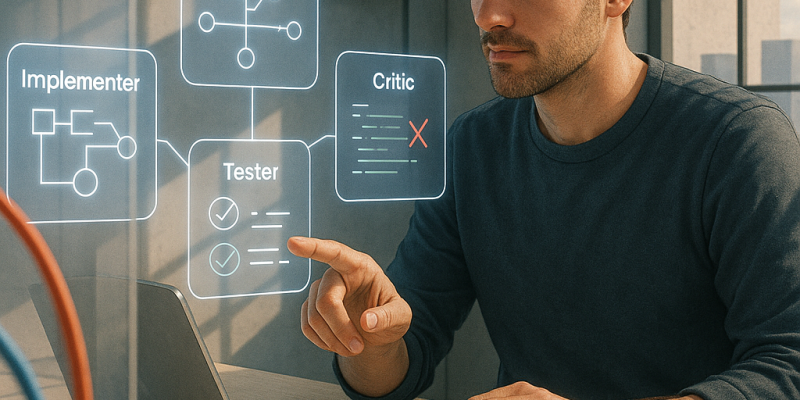
If messy backfills, one-off prod fixes, and overflowing tickets keep you up, here’s what changed in the last two weeks and what to do next. Vendors and OSS shipped agentic, multi-agent coding features late Dec (Anthropic 2025-12-23; Cursor, Windsurf; AutoGen 0.4 on 2025-12-22; LangGraph 0.2 on 2025-12-21) so LLMs can plan, implement, test, and iterate across repos. On-device moves accelerated (Apple Private Cloud Compute update 2025-12-26; Qualcomm/MediaTek benchmarks mid‐Dec), making private, low-latency assistants practical. Data and migration tooling added LLM helpers (Snowflake Dynamic Tables 2025-12-23; Databricks Delta Live Tables 2025-12-21) but expect humans to own a PDCVR loop (Plan, Do, Check, Verify, Rollback). Database change management and just‐in‐time audited access got product updates (PlanetScale/Neon, Liquibase, Flyway, Teleport, StrongDM in Dec). Action: adopt agentic workflows cautiously, run AI drafts through your PDCVR and PR/audit gates, and prioritize on‐device options for sensitive code.
From PDCVR to Agent Stacks: Inside the AI Native Engineering Operating Model
Published Jan 3, 2026
Losing engineer hours to scope creep and brittle AI hacks? Between Jan 2–3, 2026 practitioners published concrete patterns showing AI is being industrialized into an operating model you can copy. You get a PDCVR loop (Plan–Do–Check–Verify–Retrospect) around LLM coding, repo‐governed, model‐agnostic checks, and Claude Code sub‐agents for build and test; a three‐tier agent stack with folder‐level manifests and a prompt‐rewriting meta‐agent that cut typical 1–2 day tickets from ≈8 hours to ≈2–3 hours; DevScribe‐style offline workspaces that co‐host code, schemas, queries, diagrams and API tests; standardized, idempotent backfill patterns for auditable migrations; and “coordination‐aware” agents to measure the alignment tax. If you want short‐term productivity and auditable risk controls, start piloting PDCVR, repo policies, an executable workspace, and migration primitives now.

From PDCVR to Agent Stacks: The AI‐Native Engineering Blueprint
Published Jan 3, 2026
Been burned by buggy AI code or chaotic agents? Over the past 14 days, practitioners sketched an AI‐native operating model you can use as a blueprint. A senior engineer (2026‐01‐03) formalized PDCVR—Plan, Do, Check, Verify, Retrospect—using Claude Code with GLM‐4.7 to enforce TDD, small scoped loops, agented verification, and recorded retrospectives. Another thread (2026‐01‐02) shows multi‐level agent stacks: folder‐level manifests plus a meta‐agent that turns short prompts into executable specs, cutting typical 1–2 day tasks from ~8 hours to ≈2–3 hours. DevScribe (docs 2026‐01‐03) offers an offline, executable workspace for code, queries, diagrams and tests. Teams also frame data backfills as platform work (2026‐01‐02) and treat coordination drag as an “alignment tax” to be monitored by sentry agents (2026‐01‐02–03). The immediate question isn’t “use agents?” but “which operating model and metrics will you embed?”

AI Becomes an Operating Layer: PDCVR, Agents, and Executable Workspaces
Published Jan 3, 2026
You’re losing hours to coordination and rework: over the last 14 days practitioners (posts dated 2026‐01‐02/03) showed how AI is shifting from a tool to an operating layer that cuts typical 1–2 day tickets from ~8 hours to ~2–3 hours. Read on and you’ll get the concrete patterns to act on: a published Plan–Do–Check–Verify–Retrospect (PDCVR) workflow (GitHub, 2026‐01‐03) that embeds tests, multi‐agent verification, and retrospects into the SDLC; folder‐level manifests plus a prompt‐rewriting meta‐agent that preserve architecture and speed execution; DevScribe‐style executable workspaces for local DB/API runs and diagrams; structured AI‐assisted data backfills; and “alignment tax” monitoring agents to surface coordination risk. For your org, the next steps are clear: pick an operating model, pilot PDCVR and folder policies in a high‐risk stack (fintech/digital‐health), and instrument alignment metrics.

AI‐Native Operating Models: PDCVR, Agent Stacks, and Executable Workspaces
Published Jan 3, 2026
Burning hours on fragile code, migrations, and alignment? In the last two weeks (posts dated 2026‐01‐02/03), practitioners sketched public blueprints showing how LLMs and agents are being embedded into real engineering work—what you’ll get here is the patterns to adopt. Engineers describe a Plan–Do–Check–Verify–Retrospect (PDCVR) loop (Claude Code, GLM‐4.7) that wraps codegen in governance and TDD; multi‐level agent stacks plus folder‐level manifests that make repos act as soft policy engines; and a meta‐agent flow that cut typical 1–2 day tasks from ~8 hours to ~2–3 hours (20‐minute prompt, 2–3 short loops, ~1 hour testing). DevScribe‐style executable workspaces, governed data‐backfill workflows, and coordination‐aware agents complete the model. Why it matters: faster delivery, clearer risk controls, and measurable “alignment tax” for regulated fintech, trading, and health teams. Immediate takeaway: start piloting PDCVR, folder policies, executable workspaces, and coordination agents.