
Inside the AI Operating Fabric Transforming Engineering: PDCVR, Agents, Workspaces
Published Jan 3, 2026
Losing time to scope creep and brittle AI output? In the past two weeks engineers documented concrete practices showing AI is becoming the operating fabric of engineering work: PDCVR (Plan–Do–Check–Verify–Retrospect) — documented 2026‐01‐03 for Claude Code and GLM‐4.7 with GitHub prompt templates — gives an AI‐native SDLC wrapper; multi‐agent hierarchies (folder‐level instructions plus a prompt‐rewriting meta‐agent) cut typical 1–2 day monorepo tasks from ~8 hours to ~2–3 hours (reported 2026‐01‐02); DevScribe (2026‐01‐03) offers executable docs (DB queries, diagrams, REST client, offline‐first); engineers pushed reusable data backfill/migration patterns (2026‐01‐02); posts flagged an “alignment tax” on throughput (2026‐01‐02/03); and founders prototyped AI todo routers aggregating Slack/Jira/Sentry (2026‐01‐02). Immediate takeaway: implement PDCVR‐style loops, agent hierarchies, executable workspaces and alignment‐aware infra — and measure impact.
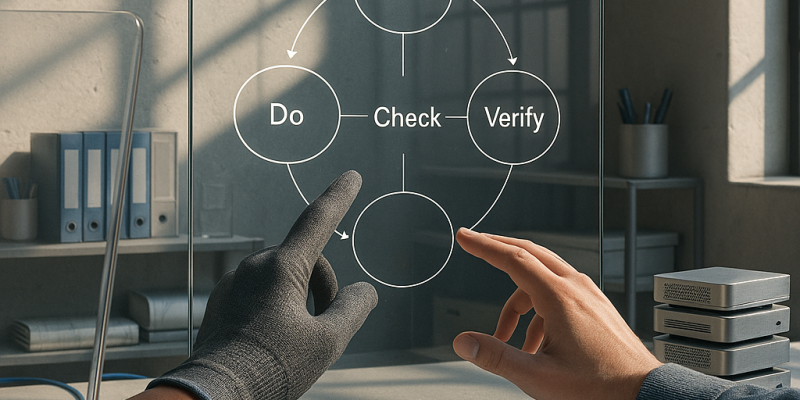
AI as Engineer: From Autocomplete to Process-Aware Collaborator
Published Jan 3, 2026
Your team’s code is fast but fragile — in the last two weeks engineers, not vendors, published practical patterns to make LLMs safe and productive. On 2026‐01‐03 a senior engineer released PDCVR (Plan‐Do‐Check‐Verify‐Retrospect) using Claude Code and GLM‐4.7 with prompts and sub‐agents on GitHub; it embeds planning, TDD, build verification, and retrospectives as an AI‐native SDLC layer for risk‐sensitive systems. On 2026‐01‐02 others showed folder‐level repo manifests plus a prompt‐rewriting meta‐agent that cut routine 1–2‐day tasks from ~8 hours to ~2–3 hours. Tooling shifted too: DevScribe (site checked 2026‐01‐03) offers executable, offline docs with DBs, diagrams, and API testing. Engineers also pushed reusable data‐migration patterns, highlighted the “alignment tax,” and prototyped Slack/Jira/Sentry aggregators. Bottom line: treat AI as a process participant — build frameworks, guardrails, and observability now.

AI Is Becoming the Operating System for Software Teams
Published Jan 3, 2026
Drowning in misaligned work and slow delivery? In the last two weeks senior engineers sketched exactly what’s changing and why it matters: AI is becoming an operating system for software teams, and this summary tells you what to expect and do. Teams are shifting from ad‐hoc prompting to repeatable, auditable frameworks like Plan–Do–Check–Verify–Retrospect (PDCVR) (implemented on Claude Code + GLM‐4.7; prompts and sub‐agents open‐sourced, Reddit 2026‐01‐03), cutting error loops with TDD and build‐verification agents. Hierarchical agents plus folder manifests trim a task from ~8 hours to ~2–3 hours (20‐minute prompt, 2–3 feedback loops, ~1 hour testing). Tools like DevScribe collapse docs, queries, diagrams, and API tests into executable workspaces. Data backfills need platform controllers with checkpointing and rollforward/rollback. The biggest ops win: alignment‐aware dashboards and AI todo aggregators to expose scope creep and speed decisions. Immediate takeaway: harden workflows, add agent tiers, and invest in alignment tooling now.

How Teams Industrialize AI: Agentic Workflows, Executable Docs, and Coordination
Published Jan 3, 2026
Tired of wasted engineering hours and coordination chaos? Over the last two weeks (Reddit threads dated 2026‐01‐02 and 2026‐01‐03, plus GitHub and DevScribe docs), engineering communities shifted from debating models to industrializing AI‐assisted development — practical frameworks, agentic workflows, executable docs, and migration patterns. Key moves: a Plan–Do–Check–Verify‐Retrospect (PDCVR) process using Claude Code and GLM‐4.7 with prompts and sub‐agents on GitHub; multi‐level agents plus folder priors that cut a typical 1–2 day task from ~8 engineer hours to ~2–3 hours; DevScribe’s offline, executable docs for DBs and APIs; and calls to build reusable data‐migration and coordination‐aware tooling to lower the “alignment tax.” If you lead engineering, treat these patterns as operational playbooks now — adopt PDCVR, folder manifests, executable docs, and attention‐aggregators to secure measurable advantage over the next 12–24 months.
Inside PDCVR: How Agentic AI Boosts Engineering 3–4×
Published Jan 3, 2026
Tired of slow, error‐prone engineering cycles? Read on: posts from Jan 2–3, 2026 show senior engineers are codifying agentic coding into a Plan–Do–Check–Verify–Retrospect (PDCVR) workflow—Plan (repo inspection and explicit TDD), Do (tests first, small diffs), Check (compare plan vs. code), Verify (Claude Code sub‐agents run builds/tests), Retrospect (capture mistakes to seed the next plan)—with prompts and agent configs on GitHub. Multi‐level agents (folder‐level manifests plus a prompt‐rewriting meta‐agent) report 3–4× day‐to‐day gains: typical 1–2 day tasks dropped from ~8 hours to ~2–3 hours. DevScribe appears as an executable, local‐first workspace (DB integration, diagrams, API testing). Data migration, the “alignment tax,” and AI todo aggregators are flagged as platform priorities. Teams that internalize these workflows and tools will define the next phase of AI in engineering.
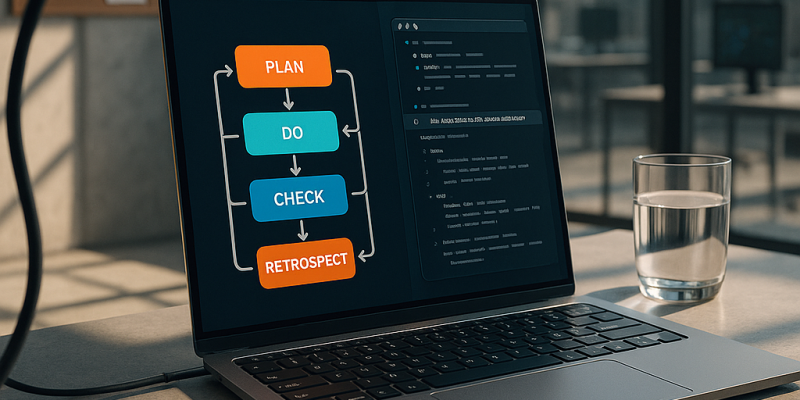
AI-Native SDLC: PDCVR, Agentic Workflows, and Executable Workspaces
Published Jan 3, 2026
Tired of AI “autocomplete” causing more rework? Reddit threads from 2026‐01‐02–03 show senior engineers wrapping LLMs into repeatable processes—here’s what matters for your org. They describe a Plan–Do–Check–Verify–Retrospect (PDCVR) loop (Claude Code + GLM‐4.7) that enforces TDD stages, separate build/verification agents, and prompt‐template retrospectives for auditability—recommended for fintech, biotech, and safety‐sensitive teams. Others report folder‐level manifests plus a prompt‐rewriting meta‐agent cutting 1–2‐day tasks from ~8 hours to ~2–3 hours (3–4× speedup). Tool trends: DevScribe’s “executable docs,” rising need for robust data‐migration/backfill frameworks, and coordination‐aware agent tooling to reduce weeks‐long alignment tax. Engineers now demand reproducible evals, exact prompts, and task‐level metrics; publish prompt libraries and benchmarks, and build verification and migration frameworks as immediate next steps.
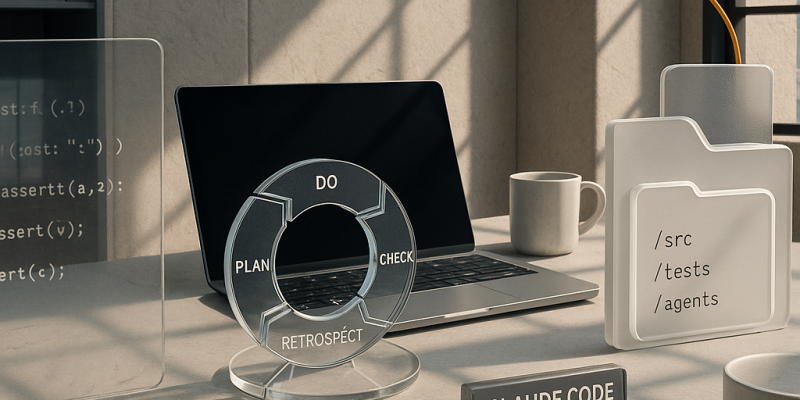
PDCVR and Agentic Workflows Industrialize AI‐Assisted Software Engineering
Published Jan 3, 2026
If your team is losing a day to routine code changes, listen: Reddit posts from 2026‐01‐02/03 show practitioners cutting typical 1–2‐day tasks from ~8 hours to about 2–3 hours by combining a Plan–Do–Check–Verify–Retrospect (PDCVR) loop with multi‐level agents, and this summary tells you what they did and why it matters. PDCVR (reported 2026‐01‐03) runs in Claude Code with GLM‐4.7, forces RED→GREEN TDD in planning, keeps small diffs, uses build‐verification and role subagents (.claude/agents) and records lessons learned. Separate posts (2026‐01‐02) show folder‐level instructions and a prompt‐rewriting meta‐agent turning vague requests into high‐fidelity prompts, giving ~20 minutes to start, 10–15 minutes per PR loop, plus ~1 hour for testing. Tools like DevScribe make docs executable (DB queries, ERDs, API tests). Bottom line: teams are industrializing AI‐assisted engineering; your immediate next step is to instrument reproducible evals—PR time, defect rates, rollbacks—and correlate them with AI use.

The Shift to Domain‐Specific Foundation Models Every Tech Leader Must Know
Published Dec 6, 2025
If your teams still bet on generic LLMs, you're facing diminishing returns — over the last two weeks the industry has accelerated toward enterprise‐grade, domain‐specific foundation models. You’ll get why this matters, what these stacks look like, and what to watch next. Three forces drove the shift: generic models stumble on niche terminology and protocol rules; high‐quality domain datasets have matured over the last 2–3 years; and tooling for safe adaptation (secure connectors, parameter‐efficient tuning like LoRA/QLoRA, retrieval, and domain evals) is now enterprise ready. Practically, stacks layer a base foundation model, domain pretraining/adaptation, retrieval/tools (backtests, lab instruments, CI), and guardrails. Impact: better correctness, calibrated outputs, and tighter integration into trading, biotech, and engineering workflows — but watch data bias, IP leakage, and regulatory guardrails. Immediate signs to monitor: vendor domain‐tuning blueprints, open‐weight domain models, and platform tooling that treats adaptation and eval as first‐class.

From Chatbots to Core: LLMs Become Dev Infrastructure
Published Dec 6, 2025
If your teams are still copy‐pasting chatbot output into editors, you’re living the “vibe coding” pain—massive, hard‐to‐audit diffs and hidden logic changes have pushed many orgs to rethink workflows. Here’s what happened in the last two weeks and what it means for you: engineers are treating LLMs as first‐class infrastructure—repo‐aware agents that index code, tests, configs and open contextual PRs; AI running in CI to review code, generate tests, and gate large PRs; and AI copilots parsing logs and drafting postmortems. That shift boosts productivity but raises real risk in fintech, trading, biotech (e.g., pandas→polars rewrites, pre‐trade check drift). Immediate responses: zone repos (green/yellow/red), log every AI action, and enforce policy engines (on‐prem/VPC for sensitive code). Watch for platform announcements and practitioner case studies to track adoption.

Agentic AI Is Going Pro: Semi‐Autonomous Teams That Ship Code
Published Dec 6, 2025
Burnout from rote engineering tasks is real—and agentic AI is now positioned to change that. Here’s what happened and why you should care: over the last two weeks (and increasingly since early 2025) agent frameworks and AI‐native workflows have matured so models can plan, act through tools, and coordinate—producing multi‐step outcomes (PRs, reports, backtests) rather than single snippets. Teams are using planner, executor, and critic agents to do multi‐file refactors, incident triage, experiment orchestration, and trading research. That matters because it can compress delivery cycles, raise research throughput, and cut time‐to‐insight—if you govern it. Immediate implications: zone autonomy (green/yellow/red), sandbox execution for trading, enforce tool catalogs and observability/audit logs, and prioritize people who can design and supervise these systems; organizations that do this will gain the edge.