From Demos to Discipline: Agentic AI's New Operating Model
Published Jan 3, 2026
Tired of AI mega‐PRs and hours lost to coordination? Engineers are turning agentic AI from demos into a repeatable operating model—you're likely to see faster, auditable workflows. Over two weeks of practitioner threads (Reddit, 2026‐01‐02/03), teams described PDCVR (Plan‐Do‐Check‐Verify‐Retrospect) run with Claude Code and GLM‐4.7, folder‐level manifests plus a meta‐agent that expands terse prompts, and executable workspaces like DevScribe. The payoff: common 1–2 day tickets fell from ~8 hours to ~2–3 hours. Parallel proposals include migration platforms (idempotent jobs, central state, chunking) for safe backfills and coordination agents to track the documented “alignment tax.” Put together—structured loops, multi‐level agents, execution‐centric docs, disciplined migrations, and alignment monitoring—this is the emergent AI operating model for high‐risk domains (fintech, digital‐health, engineering).

From Prompts to Protocols: Agentic AI as the Engineering Operating Model
Published Jan 3, 2026
Worried AI will speed things up but add risk? In the last 14 days (Reddit threads dated 2026‐01‐02/03), engineers pushed beyond vendor hype and sketched an AI‐native operating model you can use: a Plan–Do–Check–Verify–Retrospect (PDCVR) workflow (used with Claude Code and GLM‐4.7) that treats AI coding as a governance contract, folder‐level manifests that stop agents from bypassing architecture, and a prompt‐rewriting meta‐agent that turns terse requests into executable tasks. The combo cut typical 1–2 day tasks (≈8 hours of engineer time) to about 2–3 hours. DevScribe‐style, offline executable workspaces and disciplined data backfills/migrations close gaps for regulated stacks. The remaining chokepoint is “alignment tax” — missed requirements and scope creep — so next steps are instrumenting coordination sentries and baking PDCVR and folder policies into your repo and release processes.

Agentic AI Becomes Your Engineering Runtime: PDCVR, Agents, DevScribe
Published Jan 3, 2026
Worried your teams will waste weeks while competitors treat AI as a runtime, not a toy? In the last two weeks (Jan 2–3, 2026) engineering communities converged on a clear AI‐native operating model you can use now: a Plan–Do–Check–Verify–Retrospect (PDCVR) loop (used with Claude Code + GLM‐4.7) that turns LLMs into fast, reviewable junior devs; folder‐level instruction manifests plus a meta‐agent that rewrites short human prompts into thorough tasks (reducing a typical 1–2 day ticket from ~8 hours to ~2–3 hours); DevScribe‐style executable workspaces for local DB/API/diagram execution; explicit data‐migration/backfill platforms; and “alignment tax” agents that watch scope and dependencies. Why it matters: this shifts where you get advantage—from model choice to how you design and run the operating model—and these patterns are already becoming standard in fintech/trading and safety‐critical stacks.

Why Agentic AI and PDCVR Are Remaking Engineering Workflows
Published Jan 3, 2026
Tired of theory and seeing AI promise as noise? In the past 14 days practitioners documented a first draft of an AI‐native operating model you can use in production. They show a governed coding loop—Plan–Do–Check–Verify–Retrospect (PDCVR)—running on Claude Code with GLM‐4.7 (Reddit, 2026‐01‐03), with open‐sourced prompts and .claude sub‐agents on GitHub for build/test/verification. Folder‐level manifests plus a prompt‐rewriting meta‐agent cut routine 1–2 day tasks from ~8 hours to ≈2–3 hours. Workspaces like DevScribe (docs checked 2026‐01‐03) offer executable DB/API/diagram support for local control. Teams should treat data backfills as platform primitives and deploy coordination‐sentry agents to measure the alignment tax. Bottom line: AI is hardening into engineering ops; your leverage comes from how you design, govern, and iterate these workflows.

AI Becomes the Engineering Runtime: PDCVR, Agent Stacks, Executable Workspaces
Published Jan 3, 2026
Still losing hours to rework and scope creep? New practitioner threads (Jan 2–3, 2026) show AI shifting from ad‐hoc copilots to an AI‐native operating model—and here’s what to act on. A senior engineer published a production‐tested PDCVR loop (Plan‐Do‐Check‐Verify‐Retrospect) using Claude Code and GLM‐4.7 and shared prompts and subagent patterns on GitHub; it turns TDD and PDCA ideas into a model‐agnostic SDLC shell that risk teams in fintech/biotech/critical infra can accept. Teams report layered agent stacks with folder‐level manifests plus a meta‐agent cut routine 1–2 day tasks from ~8 hours to ~2–3 hours. DevScribe surfaces executable workspaces (databases, diagrams, API testing, offline‐first). Data backfills are being formalized into PDCVR flows. Alignment tax and scope creep are now measurable via agents watching Jira/Linear/RFC diffs. Immediate takeaway: pilot PDCVR, folder priors, agent topology, and an executable cockpit; expect AI to become engineering infrastructure over the next 12–24 months.
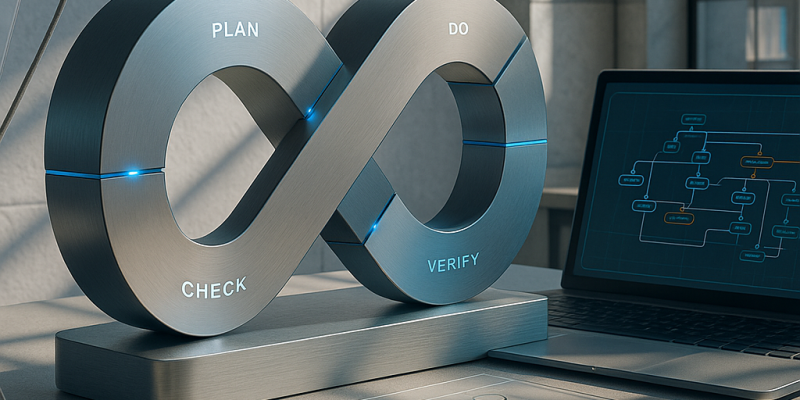
How AI Becomes Infrastructure: PDCVR, Agent Hierarchies, and Executable Workspaces
Published Jan 3, 2026
Feeling like AI adds chaos, not speed? In the past 14 days engineers and researchers have pushed AI down the stack into infrastructure: they’re building AI‐native operating models — PDCVR loops (Plan‐Do‐Check‐Verify‐Retrospect) using Claude Code with GLM‐4.7, folder‐level manifests, meta‐agents, and verification agents (Reddit/GitHub posts 2026‐01‐02–03). PDCVR enforces RED→GREEN TDD steps, offloads verification to .claude/agents, and feeds retrospects back into planning. Folder priors plus a meta‐agent cut typical 1–2‐day tasks from ~8 hours to ~2–3 hours (~20 min initial prompt, 2–3 short feedback loops, ~1 hour testing). DevScribe workspaces (verified 2026‐01‐03) host DBs, diagrams, API testing and offline execution. Teams are also standardizing data backfills and measuring an “alignment tax” from scope creep. The takeaway: don’t chase the fastest model — design the most robust AI‐native operating model for your org.

AI Is Becoming the New OS for Engineering: Inside PDCVR and Agents
Published Jan 3, 2026
Spending more time untangling coordination than shipping features? In the last 14 days (Reddit/GitHub posts dated 2026‐01‐02 and 2026‐01‐03) engineers converged on concrete patterns you can copy: an AI SDLC wrapper called PDCVR (Plan–Do–Check–Verify–Retrospect) formalizes LLM planning, TDD-style failing‐tests, agented verification, and retrospectives; multi‐level agents plus folder‐level manifests and a meta‐agent cut typical 1–2 day tickets from ~8 hours to ~2–3 hours; DevScribe‐like workspaces make docs, DB queries, APIs and tests executable and local‐first (better for regulated stacks); teams are formalizing idempotent backfills and migration runners; and "alignment tax" tooling—agents that track Jira/docs/Slack—aims to reclaim lost coordination time. Bottom line: this is less about which model wins and more about building an AI‐native operating model you can audit, control, and scale.
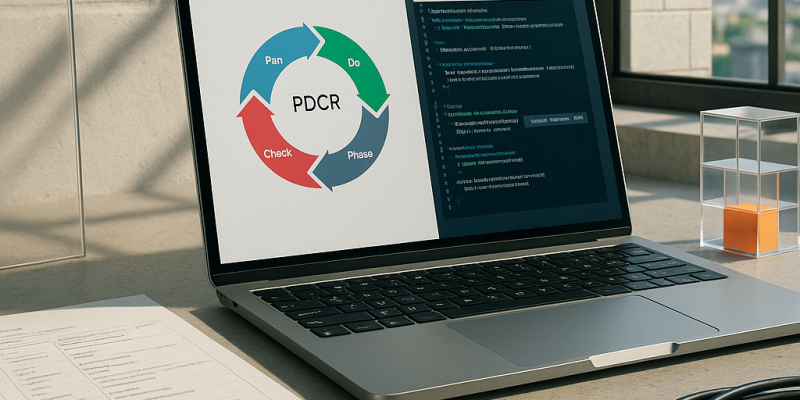
How AI Became the Engineering Operating System: PDCVR, Agents, Workspaces
Published Jan 3, 2026
In the past 14 days engineers shifted from treating LLMs as sidecar chatbots to embedding them as an operating layer—here’s what you’ll get: a concrete, auditable AI‐native engineering model and clear operational wins. A senior engineer published a Plan–Do–Check–Verify–Retrospect (PDCVR) workflow for Claude Code + GLM‐4.7 on Reddit (2026‐01‐03) with open prompts and agent configs on GitHub, turning LLMs into repeatable TDD‐driven loops. Teams add folder‐level priors and a prompt‐rewriting meta‐agent to keep architecture intact; one report cut small‐change cycle time from ~8 hours to ~2–3 hours. DevScribe (2026‐01‐03) offers an offline, executable cockpit for DBs/APIs and diagrams. Practitioners also call for treating data backfills as platform features (2026‐01‐02) and using coordination agents to reduce the “alignment tax” (2026‐01‐02/03). The takeaway: the question isn’t which model, but how you design, instrument, and evolve the workflows where models and agents live.

How AI Became Engineering Infrastructure: PDCVR, Agents, Executable Workspaces
Published Jan 3, 2026
Drowning in rework, missed dependencies, and slow releases? Read this and you’ll get the concrete engineering patterns turning AI from a feature into infrastructure. Over 2026‐01‐02–03 threads and docs, teams described a Plan–Do–Check–Verify–Retrospect (PDCVR) loop (on Claude Code and GLM‐4.7) that makes AI code changes auditable; multi‐level agents with folder‐level priors plus a prompt‐rewriting meta‐agent that cut typical 1–2 day tasks to ~2–3 hours (a 3–4× speedup); DevScribe‐style executable workspaces for code, DBs, and APIs; platformized, idempotent data backfills; tooling to measure the “alignment tax”; and AI todo routers that unify Slack, Jira, and Sentry. If you run critical systems (finance, health, trading), start adopting disciplined loops, folder priors, and observable migration primitives—mastering these patterns matters as much as picking a model.

How AI Became Your Colleague: The New AI-Native Engineering Playbook
Published Jan 3, 2026
If your teams are losing days to rework, pay attention: over Jan 2–3, 2026 engineers shared concrete practices that make AI a predictable, auditable colleague. You get a compact playbook: PDCVR (Plan–Do–Check–Verify–Retrospect) for Claude Code and GLM‐4.7—plan with RED→GREEN TDD, have the model write failing tests and iterate, run completeness checks, use Claude Code sub‐agents to run builds/tests, and log lessons (GitHub templates published 2026‐01‐03). Paired with folder‐level specs and a prompt‐rewriting meta‐agent, 1–2 day tasks fell from ~8 hours to ~2–3 hours (20‐min prompt + a few 10–15 min loops + ~1 hour testing) (Reddit, 2026‐01‐02). DevScribe‐style executable, offline workspaces, reusable migration/backfill frameworks, alignment‐monitoring agents, and AI “todo routers” complete the stack. Bottom line: adopt PDCVR, agent hierarchies, and executable workspaces to cut cycle time and make AI collaboration auditable—and start by piloting these patterns in safety‐sensitive flows.