
AI Becomes Infrastructure: From Coding Agents to Edge, Quantum, Biotech
Published Jan 4, 2026
If you still think AI is just autocomplete, wake up: in the two weeks from 2024-12-22 to 2025-01-04 major vendors moved AI into IDEs, repos, devices, labs and security frameworks. You’ll get what changed and what to do. JetBrains (release notes 2024-12-23) added multifile navigation, test generation and refactoring inside IntelliJ; GitHub rolled out Copilot Workspace and IDE integrations; Google and Microsoft refreshed enterprise integration patterns. Qualcomm and Nvidia updated on-device stacks (around 2024-12-22–12-23); Meta and community forks pushed sub‐3B LLaMA variants for edge use. Quantinuum reported 8 logical qubits (late 2024). DeepMind/Isomorphic and open-source projects packaged AlphaFold 3 into lab pipelines. CISA and OSS communities extended SBOM and supply‐chain guidance to models. Bottom line: AI’s now infrastructure—prioritize repo/CI/policy integration, model provenance, and end‐to‐end workflows if you want production value.
Laptops and Phones Can Now Run Multimodal AI — Here's Why
Published Jan 4, 2026
Worried about latency, privacy, or un‐auditable AI in your products? In the last two weeks vendors shifted multimodal and compiler work from “cloud‐only” to truly on‐device: Apple’s MLX added optimized kernels and commits (2024‐12‐28 to 2025‐01‐03) and independent llama.cpp benchmarks (2024‐12‐30) show a 7B model at ~20–30 tokens/s on M1/M2 at 4‐bit; Qualcomm’s Snapdragon 8 Gen 4 cites up to 45 TOPS (2024‐12‐17) and MediaTek’s Dimensity 9400 >60 TOPS (2024‐11‐18). At the same time GitHub (docs 2024‐12‐19; blog 2025‐01‐02) and JetBrains (2024‐12‐17, 2025‐01‐02) push plan–execute–verify agents with audit trails, while LangSmith (2024‐12‐22) and Arize Phoenix (commits through 2024‐12‐27) make LLM traces and evals first‐class. Practical takeaway: target hybrid architectures—local summarization/intent on-device, cloud for heavy retrieval—and bake in tests, traces, and governance now.
From Copilots to Pipelines: AI Enters Professional Infrastructure
Published Jan 4, 2026
Tired of copilots that only autocomplete? In the two weeks from 2024‐12‐22 to 2025‐01‐04 the market moved: GitHub Copilot Workspace (public preview, rolling since 2024‐12‐17) and Sourcegraph Cody 1.0 pushed agentic, repo‐scale edits and plan‐execute‐verify loops; Qualcomm, Apple, and mobile LLaMA work targeted sub‐10B on‐device latency; IBM, Quantinuum, and PsiQuantum updated roadmaps toward logical qubits (late‐December updates); DeepMind’s AlphaFold 3 tooling and OpenFold patched production workflows; Epic/Nuance DAX Copilot and Mayo Clinic posted deployments reducing documentation time; exchanges and FINRA updated AI surveillance work; LangSmith, Arize Phoenix and APM vendors expanded LLM observability; and hiring data flagged platform‐engineering demand. Why it matters: AI is being embedded into operations, so expect impacts on code review, test coverage, privacy architecture, auditability, and staffing. Immediate takeaway: prioritize observability, audit logs, on‐device‐first designs, and platform engineering around AI services.
From Models to Middleware: AI Embeds Into Enterprise Workflows
Published Jan 4, 2026
Drowning in pilot projects and vendor demos? Over late 2024–Jan 2025, major vendors moved from single “copilots” to production-ready, orchestrated AI in enterprise stacks—and here’s what you’ll get: Microsoft and Google updated agent docs and samples to favor multi-step workflows, function/tool calling, and enterprise guardrails; Qualcomm and Arm pushed concrete silicon, SDKs and drivers (Snapdragon X Elite targeting NPUs above 40 TOPS INT8) to run models on-device; DeepMind’s AlphaFold 3 and open protein models integrated into drug‐discovery pipelines; Epic/Microsoft and Google Health rolled generative documentation pilots into EHRs with time savings; Nasdaq and vendors deployed LLMs for surveillance and research; GitHub/GitLab embedded AI into SDLC; IBM and Microsoft focused quantum roadmaps on logical qubits. Bottom line: the leverage is systems and workflow design—build safe tools, observability, and platform controls, not just pick models.

AI Moves Into the Control Loop: From Agents to On-Device LLMs
Published Jan 4, 2026
Worried AI is still just hype? December’s releases show it’s becoming operational—and this summary gives you the essentials and immediate priorities. On 2024-12-19 Microsoft Research published AutoDev, an open-source framework for repo- and org-level multi-agent coding with tool integrations and human review at the PR boundary. The same day Qualcomm demoed a 700M LLM on Snapdragon 8 Elite at ~20 tokens/s and ~0.6–0.7s first-token latency at <5W. Mayo Clinic (2024-12-23) found LLM-assisted notes cut documentation time 25–40% with no significant rise in critical errors. Bayer/Tsinghua reported toxicity-prediction gains (3–7pp AUC) and potential 20–30% fewer screens. CME, GitHub, FedNow (800+ participants, +60% daily volume) and Quantinuum/Microsoft (logical error rates 10–100× lower) all show AI moving into risk, security, payments, and fault-tolerant stacks. Action: prioritize integration, validation, and human-in-loop controls.

AI Embedded: On‐Device Assistants, Agentic Workflows, and Industry Impact
Published Jan 4, 2026
Worried AI is still just a research toy? Here’s a two‐week briefing so you know what to do next. Major vendors pushed AI into devices and workflows: Apple (Dec 16) rolled out on‐device models in iOS 18.2 betas, Google tightened Gemini into Android and Workspace (Dec 18–20), and OpenAI tuned GPT‐4o mini and tool calls for low‐latency apps (Dec). Teams are building agentic SDLCs—PDCVR loops surfaced on Reddit (Jan 3) and GitHub reports AI suggestions accepted in over 30% of edits on some repos. In biotech, AI‐designed drugs hit Phase II (Insilico, Dec 19) and Exscientia cited faster cycles (Dec 17); in vivo editing groups set 2026 human data targets. Payments and markets saw FedNow adoption by hundreds of banks (Dec 23) and exchanges pushing low‐latency feeds. Immediate implications: adopt hybrid on‐device/cloud models, formalize agent guardrails, update procurement for memory‐safe tech, and prioritize reliability for real‐time rails.
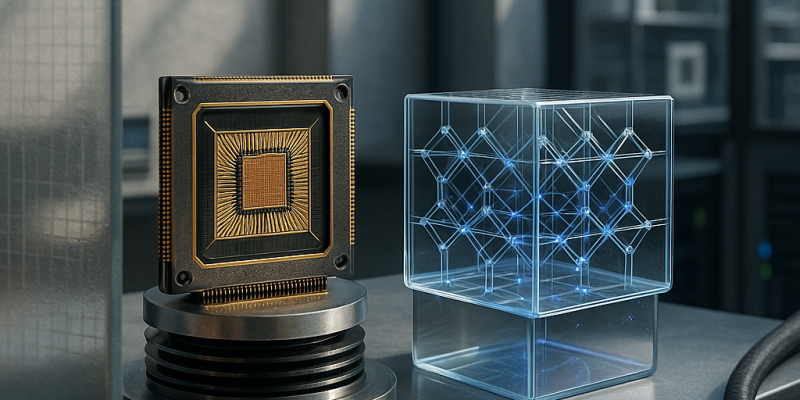
From Qubits to Services: Error Correction Is the Real Quantum Breakthrough
Published Dec 6, 2025
If you’re still judging progress by raw qubit headlines, you’re missing the real shift: in the last two weeks several leading programs delivered concrete advances in error correction and algorithmic fault tolerance. This short brief tells you what changed, why it matters for customers and revenue, and what to do next. What happened: hardware teams reported increased physical qubit counts (dozens to hundreds) with better coherence, experiments that go beyond toy codes, and tighter classical‐control/decoder integration—yielding small logical qubit systems where logical error rates sit below physical rates. Why it matters: AI, quant trading, biotech and software teams will see quantum capabilities emerge as composable services—hybrid quantum‐classical kernels for optimization, Monte Carlo, and molecular simulation—if logical qubit roadmaps mature. Risks: large overheads (hundreds–thousands of physical per logical) and timeline uncertainty. Immediate steps: get algorithm‐ready, design quantum‐aware integrations, and track logical‐qubit and fault‐tolerance milestones.

Millisecond Qubits and Logical Qubits Bring Quantum Advantage Closer
Published Nov 20, 2025
Worried quantum computing is still all promise and no product? Here’s what you’ll get: a concise read of hard milestones and why they change timelines. On 2025-11-05 Princeton published a Nature result showing a tantalum-on-silicon qubit with >1 millisecond coherence (≈3× previous lab devices, ~15× industrial baseline), and on 2025-11-12 IBM unveiled its Loon chip and Nighthawk (Nighthawk due public by end‐2025) as steps toward utility, plus Heron now runs circuits with 5,000 two‐qubit gates (performance example: 2.2 vs 112 hours). Quantinuum’s Helios turned 98 physical barium ions into 48 logical qubits (≈2:1 overhead) with gate fidelities of 99.9975%/99.921%, and IonQ+NVIDIA showed a hybrid chemistry workflow. These advances cut error‐correction pressure, enable deeper circuits and hybrid use cases, and make logical‐qubit demos, fidelity at scale, and tooling the things you should watch in the next 6–12 months.
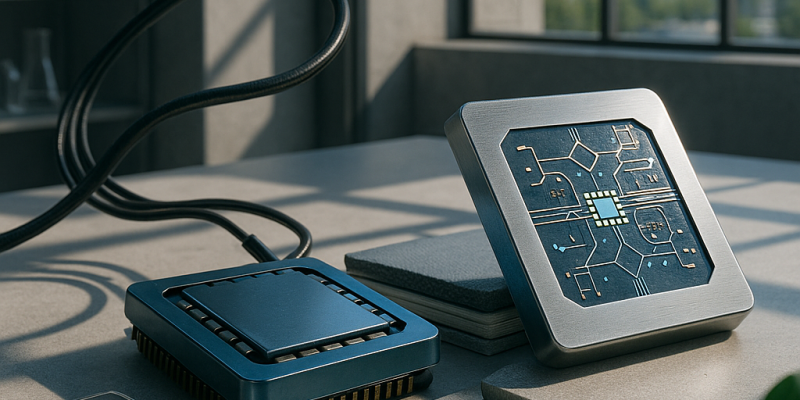
Edge AI Meets Quantum: MMEdge and IBM Reshape the Future
Published Nov 19, 2025
Latency killing your edge apps? Read this: two near-term advances could change where AI runs. MMEdge (arXiv:2510.25327) is a recent on‐device multimodal framework that pipelines sensing and encoding, uses temporal aggregation and speculative skipping to start inference before full inputs arrive, and—tested in a UAV and on standard datasets—cuts end‐to‐end latency while keeping accuracy. IBM unveiled Nighthawk (120 qubits, 218 tunable couplers; up to 5,000 two‐qubit gates; testing late 2025) and Loon (112 qubits, six‐way couplers) as stepstones toward fault‐tolerant QEC and a Starling system by 2029. Why it matters to you: faster, deterministic edge decisions for AR/VR, drones, medical wearables; new product and investment opportunities; and a need to track edge latency benchmarks, early quantum demos, and hardware–software co‐design.
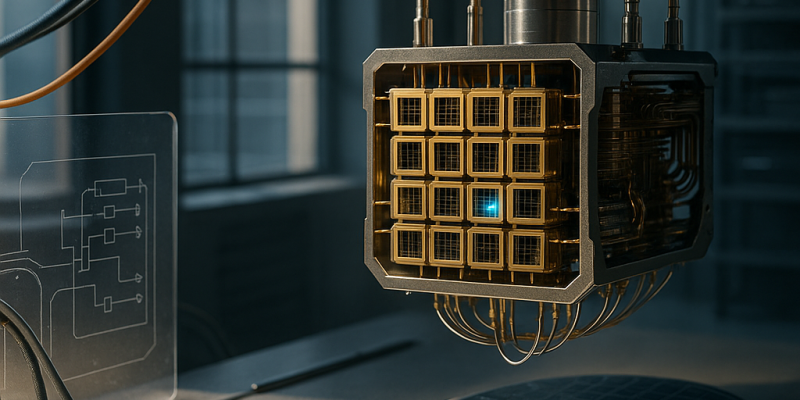
Fault-Tolerant Quantum Computing Is Near: IBM, QuEra Accelerate Timelines
Published Nov 18, 2025
Think fault‐tolerant quantum is decades away? Mid‐November 2025 developments say otherwise, and here’s what you need fast: on 2025‐11‐12 IBM unveiled Nighthawk (120 qubits, 218 tunable couplers, 30% more circuit complexity) and Loon (hardware elements for fault tolerance), while IBM’s qLDPC decoders ran 10× faster, dynamic circuits gained 24% accuracy, and error mitigation cut some costs by >100×. QuEra (with Harvard/Yale) published in Nature a low‐overhead fault‐tolerance method that uses one syndrome extraction per logical layer, slashing runtime overhead. Why it matters: these shifts move verified quantum advantage toward 2026 and realistic fault tolerance toward a 2029 Starling target (confidence ~80%). Watch quantum‐advantage demos, logical vs. physical error rates, qLDPC adoption, fabrication/yield, and decoder latency (<480 ns) as immediate next indicators.