Programmable Sound: AI Foundation Models Are Rewriting Music and Game Audio
Published Dec 6, 2025
Tired of wrestling with flat, uneditable audio tracks? Over the last 14 days major labs and open‐source communities converged on foundation audio models that treat music, sound and full mixes as editable, programmable objects—backed by code, prompts and real‐time control—here’s what that means for you. These scene‐level, stem‐aware models can separate/generate stems, respect structure (intro/verse/chorus), follow MIDI/chord constraints, and edit parts non‐destructively. That shift lets artists iterate sketches and swap drum textures without breaking harmonies, enables adaptive game and UX soundtracks, and opens audio agents for live scoring or auto‐mixing. Risks: style homogenization, data provenance and legal ambiguity, and latency/compute tradeoffs. Near term (12–24 months) action: treat models as idea multipliers, invest in unique sound data, prioritize controllability/low‐latency integrations, and add watermarking/provenance for safety.
The Real AI Edge: Opinionated Workflows, Not New Models
Published Dec 6, 2025
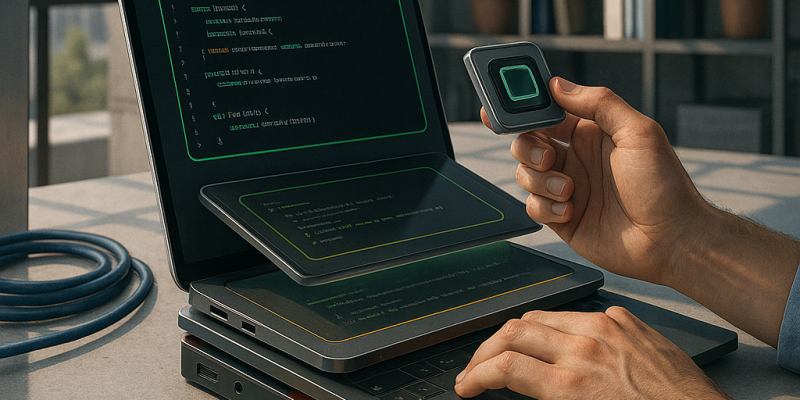
Code reviewers are burning 12–15 hours a week on low‐signal, AI‐generated PRs—so what should you do? Over the last two weeks (with practitioner threads on Reddit: 2025‐11‐21, 2025‐11‐22, 2025‐12‐05) senior engineers in finance, infra, and public‐sector data say the problem isn’t models but broken workflows: tool sprawl, “vibe‐coded” over‐abstracted changes, slower iteration, and higher maintenance risk. The practical fix that’s emerging: pick one primary assistant and master it (a month trial delivered edits that fell from 2–3 minutes to under 10 seconds), treat others as specialists, and map your repo into green/yellow/red AI zones enforced by CI and access controls. Measure outcomes (lead time, change‐failure rate, review time), lock down AI use via operating policies, and ban unsupervised AI in high‐risk flows—these are the immediate steps to turn hype into reliable productivity.

Helios and Loon Spark Quantum Shift Toward Error-Corrected, Enterprise Computing
Published Nov 12, 2025
On Nov 5, 2025 Quantinuum commercially launched Helios, a 98 fully‐connected barium‐ion system claiming 99.9975% single‐qubit and 99.921% two‐qubit gate fidelity, offering 94 error‐detected logical qubits (50 used in magnetism simulations) and 48 fully error‐corrected logical qubits with 99.99% state preparation/measurement fidelity; Helios includes the Guppy Python language, NVIDIA GB200 via NVQLink, real‐time classical control, is available cloud and on‐premises, serves customers including Amgen, BMW, JPMorgan Chase, SoftBank and Sparrow, will be hosted in Singapore in 2026, and positions Quantinuum in DARPA’s QBI phase B toward a utility‐scale "Lumos" by 2033. A week later (Nov 12, 2025) IBM unveiled the experimental Loon chip—fabricated at Albany NanoTech—that adapts a cellphone‐signal algorithm for quantum error correction and, with Nighthawk due end‐2025, outlines a path to useful, error‐corrected machines by 2029 and some quantum‐advantage tasks by late 2026. These developments shift quantum computing toward enterprise utility and near‐term application testing.